





What's Happening?
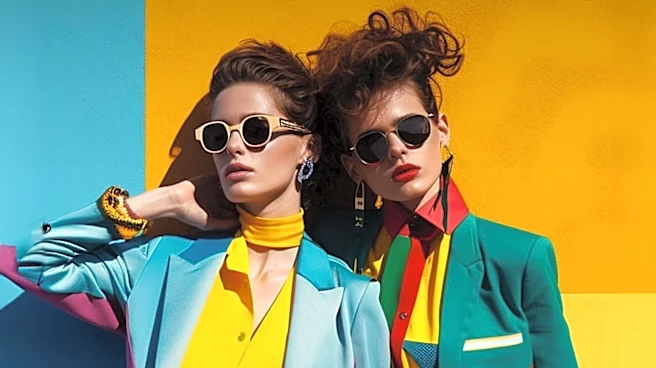
The fashion industry is witnessing a significant shift from the minimalist trends of the 1990s to the bold and extravagant styles of the 1980s. This change is characterized by the resurgence of vibrant colors, structured shoulders, and oversized accessories.
The 2026 runways have highlighted this transition, encouraging fashion enthusiasts to embrace eccentric pieces with a contemporary twist. Key trends include clashing colors, such as red and violet pairings, and the return of stirrup pants, which have been reimagined in tailored designs. Accessories are also making a statement, with oversized earrings and aviator sunglasses gaining popularity. This shift marks a deliberate move away from the understated elegance that has dominated recent fashion seasons.
Why It's Important?
This trend shift is significant as it reflects broader cultural and economic dynamics. The move towards bold fashion can be seen as a response to a desire for self-expression and individuality, contrasting with the previous era's focus on subtlety and restraint. For the fashion industry, this change could lead to increased consumer spending as people update their wardrobes to align with the new trends. Retailers and designers may benefit from this renewed interest in vibrant and statement-making pieces, potentially boosting sales and driving innovation in fashion design. Additionally, this trend could influence other sectors, such as beauty and lifestyle, as the demand for complementary products and services grows.
What's Next?
As the fashion industry continues to embrace 1980s trends, consumers can expect to see more bold and colorful designs in stores and on the streets. Designers may further explore the fusion of retro styles with modern elements, creating unique and innovative collections. Fashion events and red carpets will likely showcase these trends, influencing public perception and adoption. Retailers might adjust their inventory to cater to the growing demand for statement pieces, while fashion media will play a crucial role in promoting and interpreting these trends for a wider audience.