






What's Happening?
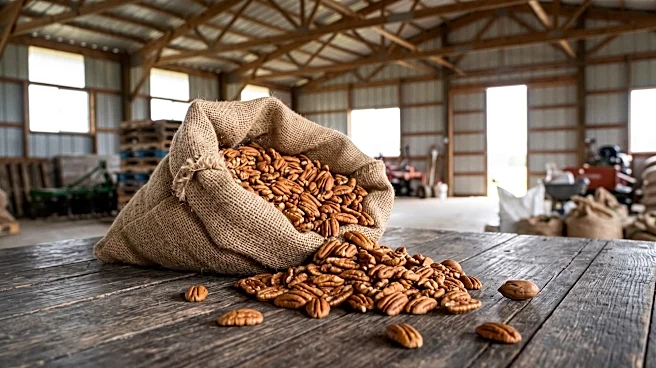
The U.S. Department of Agriculture (USDA) is proposing significant changes to the rules governing the pecan industry across 15 states. These proposed amendments aim to address shifts within the industry, particularly the decline in the number of pecan shelling
businesses, which has fallen from 50 in 2016 to fewer than 30 by August of the previous year. This reduction has made it challenging to fill positions on the American Pecan Council. The proposed changes include eliminating regional and business-size restrictions for sheller representation, allowing qualified shellers to compete for council seats irrespective of their location or operational scale. Additionally, the proposal mandates monthly reporting of pecan transfers between handlers, detailing the weight and type of pecans, and establishes penalties for overdue assessments. These modifications would impact the federal pecan marketing order covering states such as Georgia, Alabama, and Florida, while ensuring that grower representation remains unchanged.
Why It's Important?
These proposed rule changes are critical for the long-term health and effective governance of the U.S. pecan industry. The decline in shelling businesses has created a representation gap on the American Pecan Council, potentially hindering the industry's ability to make informed decisions and adapt to market dynamics. By removing restrictive criteria for council seats, the USDA aims to foster more inclusive and robust industry leadership. The requirement for monthly reporting of pecan transfers will enhance transparency and accuracy in market data, which is essential for efficient supply chain management and fair pricing. Furthermore, establishing penalties for overdue assessments will ensure financial stability for the council's operations. These measures are intended to improve industry representation, data accuracy, and timely payments, ultimately benefiting pecan growers, shellers, and the broader agricultural economy in the affected states.
What's Next?
The proposed changes are currently in a public comment period, with feedback being accepted through December ninth at Regulations.gov. This phase is crucial as it allows all stakeholders, including growers, shellers, and other industry participants, to voice their opinions and concerns, which the USDA will consider before finalizing the rules. The American Pecan Council, which recommended these changes, will likely continue to advocate for their adoption, emphasizing the benefits of improved industry representation and operational efficiency. The outcome of this public comment period will determine the final form of the regulations, which could significantly reshape how the pecan industry operates and is governed in the coming years, impacting market dynamics and the economic well-being of those involved in pecan production and processing.
Beyond the Headlines
Beyond the immediate regulatory adjustments, these proposed changes reflect a broader trend of consolidation and adaptation within the agricultural sector. The shrinking number of pecan shelling businesses highlights economic pressures and evolving market structures that necessitate regulatory frameworks to remain agile and responsive. This situation also underscores the importance of industry councils and marketing orders in providing a collective voice and ensuring fair practices within specialized agricultural markets. The USDA's proactive approach in addressing these challenges through regulatory reform demonstrates a commitment to supporting the long-term viability of U.S. agriculture. The emphasis on transparency through reporting requirements also points to a growing demand for data-driven decision-making and accountability across agricultural supply chains, which could serve as a model for other commodity sectors facing similar structural shifts.