





What's Happening?
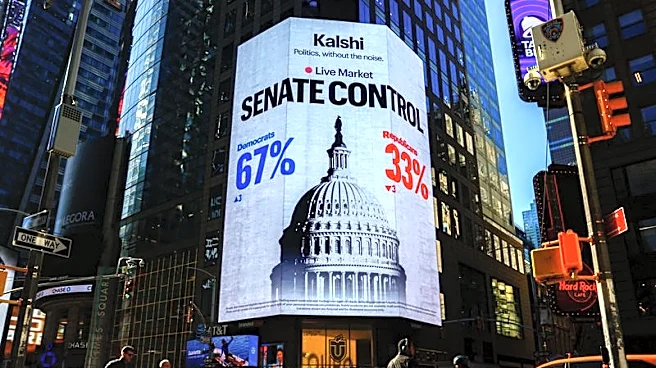
Prediction markets, including platforms like Kalshi and Polymarket, accurately predicted the Democratic sweep of both the House and Senate in the recent midterm elections, handling over $1.9 billion in trading volume. Despite this success, these markets also
showed some inaccuracies, missing several upsets by wider margins than traditional polling. For instance, a week before the vote, traders heavily favored Republicans in races they ultimately lost. Furthermore, both platforms incorrectly predicted a victory for Flávio Bolsonaro in Brazil's runoff election. Now, these markets face an uncertain future as a new Congress may move to regulate their operations. A significant issue is the lack of clear IRS guidance on whether these contracts are considered wagering or investments, which drastically impacts tax obligations for traders. Under current budget law, gambling losses are only deductible up to 90% of winnings and only for itemizers, potentially leading to tax liabilities on non-existent income for traders who net zero. This ambiguity means the same payout could be taxed at either 37% or 20%, depending on its classification.
Why It's Important?
The regulatory and tax uncertainties surrounding prediction markets pose a significant challenge to their continued growth and mainstream acceptance. Without clear IRS guidance, traders face unpredictable tax burdens, which could deter participation and investment in these platforms. The potential for new congressional regulation also introduces an element of risk, as stricter rules could limit the types of events available for trading or impose operational constraints. While prediction markets have demonstrated their utility as forecasting tools, their occasional inaccuracies, particularly in close races or international events, highlight the need for continuous improvement and scrutiny. The debate over whether these contracts are gambling or legitimate investments has broad implications for their legal status, consumer protection, and integration into the broader financial system. Resolving these issues is crucial for prediction markets to fully realize their potential as valuable economic instruments and information aggregators.
What's Next?
The immediate future for prediction markets will likely involve increased lobbying efforts by platforms like Kalshi and Polymarket to advocate for favorable regulatory and tax classifications. With a new Congress in session, there is a possibility of legislative action to clarify the legal status of these contracts and establish a consistent tax framework. Traders and market participants will be closely watching for any IRS guidance or congressional bills that address these ambiguities. The industry may also focus on enhancing the accuracy of their predictions, particularly in volatile or uncertain scenarios, to bolster their credibility. Furthermore, as these markets continue to grow in popularity, there could be increased scrutiny from consumer protection advocates regarding transparency, fairness, and the potential for market manipulation. The resolution of these regulatory and tax issues will be critical in determining the long-term trajectory and stability of the prediction market industry in the U.S.
Beyond the Headlines
The regulatory and tax challenges faced by prediction markets underscore a broader tension between innovation in financial technology and existing legal frameworks. The classification of these contracts as either 'wagering' or 'investment' has profound implications, not just for tax rates but also for consumer protection laws, advertising standards, and the types of entities allowed to operate such platforms. Ethically, the debate touches on the societal perception of risk-taking and speculation versus informed investment. Legally, a clear definition from Congress or the IRS would provide much-needed certainty, potentially unlocking further institutional investment and broader public participation. Culturally, the evolution of prediction markets reflects a growing societal interest in quantifying future probabilities and leveraging collective intelligence for forecasting. The outcome of these regulatory battles will shape how new financial instruments are integrated into the U.S. economy and how the government adapts to rapidly evolving digital markets.