





What's Happening?
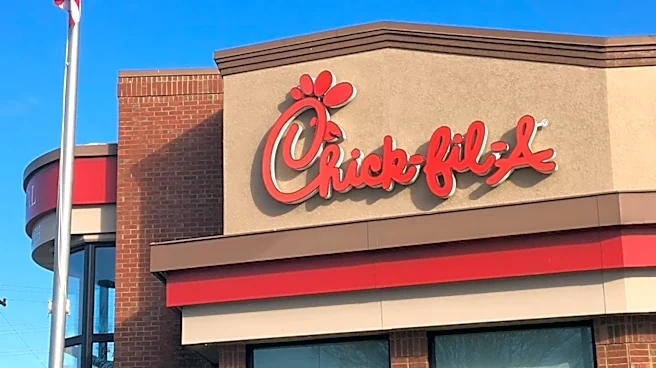
Chick-fil-A has announced it will not be implementing artificial intelligence for its drive-thru ordering services, opting instead to maintain human interaction. CEO Andrew Cathy stated that while the company is exploring AI for behind-the-scenes operations,
the core customer experience in the drive-thru will remain human-to-human. This decision contrasts with several fast-food competitors, such as McDonald's, which plans to test its 'Archy' AI assistant, and Wendy's, which has already rolled out its 'FreshAi' AI drive-thru ordering assistant. A survey conducted by SurveyMonkey indicated that 79% of customers prefer interacting with a human over automated customer service. Chick-fil-A's consistent focus on customer service has historically placed it among the top performers in customer satisfaction indices within the fast-food industry.
Why It's Important?
This decision by Chick-fil-A highlights a significant divergence in strategy within the fast-food industry regarding the integration of AI in customer-facing roles. While many companies are embracing AI for efficiency and cost-saving, Chick-fil-A is prioritizing its established reputation for hospitality and human connection. This approach could reinforce customer loyalty among those who value personal service, potentially giving Chick-fil-A a competitive edge in customer satisfaction. Conversely, rivals investing in AI aim to streamline operations, reduce wait times, and potentially lower labor costs, which could appeal to other segments of the market. The outcome of these differing strategies will offer valuable insights into consumer preferences and the long-term viability of human-centric versus AI-driven customer service models in the quick-service restaurant sector.
What's Next?
Chick-fil-A is expected to continue exploring AI applications for its internal operations, focusing on areas that do not directly replace human customer interaction. The company will likely monitor the success and customer reception of AI drive-thru systems implemented by its competitors. Other fast-food chains will proceed with their AI pilot programs, gathering data on efficiency, customer satisfaction, and operational costs. The broader industry will observe these developments to determine the optimal balance between technological advancement and maintaining a human touch in customer service. Future consumer surveys may further clarify whether the preference for human interaction in drive-thrus remains strong or shifts as AI technology becomes more sophisticated and integrated.
Beyond the Headlines
Chick-fil-A's stance raises broader questions about the role of technology in service industries and the value placed on human labor and interaction in an increasingly automated world. This decision could influence other sectors where customer experience is paramount, prompting businesses to consider the potential trade-offs between efficiency gains from AI and the perceived value of human engagement. It also underscores the ethical and societal implications of AI adoption, particularly concerning job displacement and the quality of human-to-human interactions. The company's commitment to human hospitality could set a precedent, encouraging a more thoughtful and balanced integration of AI that augments rather than replaces human roles, especially in customer-facing positions.