

What's Happening?
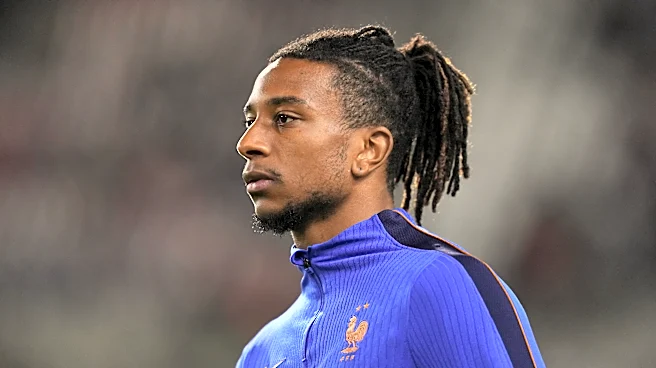
Paris Saint-Germain (PSG) has confirmed that midfielder Senny Mayulu will be out for several weeks due to a left thigh injury. The injury occurred while Mayulu was playing for France's Under-21s team against Estonia earlier this week. Initial reports
suggested the injury might not be severe, as Mayulu remained with the team in hopes of participating in subsequent games during the international break. However, a statement released by PSG indicated that the injury is worse than initially thought, necessitating a period of treatment over the coming weeks. The club's statement specified that Mayulu will be sidelined while receiving treatment, though it did not mention the need for surgery. This development comes as PSG navigates the extended international break, with the club having largely avoided injuries to its starting players.
Why It's Important?
The injury to Senny Mayulu, a young and versatile midfielder, represents a setback for Paris Saint-Germain, particularly as the club aims to maintain squad depth and develop emerging talent. While Mayulu may not be a regular starter, his absence impacts the team's options for rotation and could place additional strain on other midfielders, especially during periods of congested fixtures. For Mayulu himself, this injury disrupts his development and opportunity to gain valuable playing time, which is crucial for a 20-year-old player looking to establish himself at a top-tier club. The incident also highlights the inherent risks of international duty for club players, where injuries sustained away from club medical staff can have significant consequences for their domestic and European campaigns. PSG will need to manage his recovery carefully to ensure a full return to fitness and prevent long-term issues.
What's Next?
Senny Mayulu will undergo treatment for his left thigh injury in the coming weeks, as confirmed by Paris Saint-Germain. The focus will be on his rehabilitation process, which will likely involve a structured program of rest, physical therapy, and gradual return to training. The club's medical staff will closely monitor his progress to determine a precise timeline for his return to competitive play. While no surgery has been mentioned, the duration of his absence will depend on how well he responds to treatment. PSG will need to adjust its squad planning in the short term, potentially relying more on other midfielders or promoting players from its academy to fill the void left by Mayulu's injury. His return will be anticipated as the season progresses and the team faces various competitions.
Beyond the Headlines
Mayulu's injury underscores the broader challenges faced by football clubs in managing player welfare, particularly with the increasing demands of both domestic and international competitions. The balance between allowing young talents to gain experience on the international stage and protecting them from injury is a constant concern. For PSG, investing in young players like Mayulu is part of a long-term strategy to build a sustainable squad. Injuries to such prospects can impact not only immediate team performance but also the club's future talent pipeline and financial investments. This situation also brings into focus the role of national federations in player care and communication with clubs regarding player health, especially during international breaks. The incident serves as a reminder of the fragility of athletic careers and the extensive support systems required to maintain player health and performance at elite levels.