






What's Happening?
New Wave Magazine highlights the importance of books in understanding the connections between fashion, art, and music within various subcultures. The article suggests a method for building a reading path by pairing visual sources, critical histories,
and first-person accounts to explore a specific scene. For instance, to study post-punk, one could start with 'Punk: Chaos to Couture' for visual context, followed by Simon Reynolds’s 'Rip It Up and Start Again: Postpunk 1978–1984' for historical and critical analysis, and conclude with 'Please Kill Me: The Uncensored Oral History of Punk' for firsthand perspectives. This approach allows for a comprehensive understanding of how clothing, sound, dance, venues, graphics, and political identity intertwine within subcultures. The article also mentions that music biographies and oral histories can reveal the designers, stylists, art directors, and photographers behind an artist’s public image, emphasizing the need to cross-reference these claims with visual sources.
Why It's Important?
This curated approach to studying subcultures through literature is important for several reasons. It provides a structured framework for researchers, students, and enthusiasts to delve into the complex interplay of creative disciplines that define cultural movements. By combining different types of sources, readers can gain a nuanced understanding of how fashion serves as a visual language, music as an auditory expression, and art as a broader creative outlet, all contributing to a collective identity. This method also underscores the value of historical context and personal narratives in interpreting cultural phenomena, preventing a one-dimensional view. For industries like fashion, music, and publishing, this highlights the enduring relevance of physical and digital books as essential tools for cultural preservation, education, and inspiration, fostering a deeper appreciation for the origins and evolution of style and sound.
What's Next?
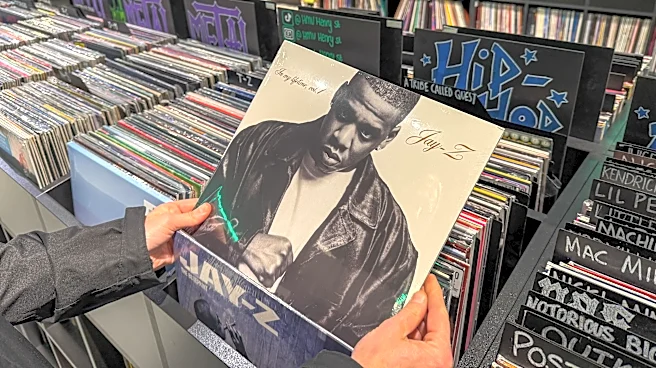
The suggested reading paths encourage further exploration into various subcultures beyond post-punk, such as disco, hip-hop, and rave. The article recommends using specific books like Vikki Tobak’s 'Contact High: A Visual History of Hip-Hop' and Jeff Chang’s 'Can’t Stop Won’t Stop: A History of the Hip-Hop Generation' for hip-hop studies. This implies a continuous and evolving process of discovery, where recurring names and themes across different books can lead to new avenues of research. The emphasis on cross-referencing information from various sources, including museum and publisher websites, specialist art-book sellers, and university repositories, suggests an ongoing effort to ensure accuracy and completeness in understanding these cultural narratives. The article also cautions against relying solely on unofficial repositories like Z-library, advocating for authorized and verified sources.
Beyond the Headlines
The deeper implication of this approach lies in recognizing the holistic nature of cultural expression. Fashion is not merely clothing; it is a statement, a uniform, and a reflection of societal values and individual identity. Similarly, music transcends entertainment to become a powerful vehicle for social commentary and community building. By examining these elements together, one can uncover the ethical, legal, and cultural dimensions that shape subcultures. This method fosters critical thinking, encouraging readers to question narratives and seek diverse perspectives. It also highlights the role of documentation and archiving in preserving the rich tapestry of human creativity, ensuring that future generations can learn from and be inspired by these movements. The article subtly advocates for intellectual rigor in cultural studies, emphasizing the importance of verified sources and comprehensive research.