





What's Happening?
South Korea's Information and Communications Technology (ICT) exports experienced an unprecedented surge in October, reaching $70.35 billion, a 202.0% increase year-over-year. This marks the first time the monthly growth rate has exceeded 200%. Semiconductor
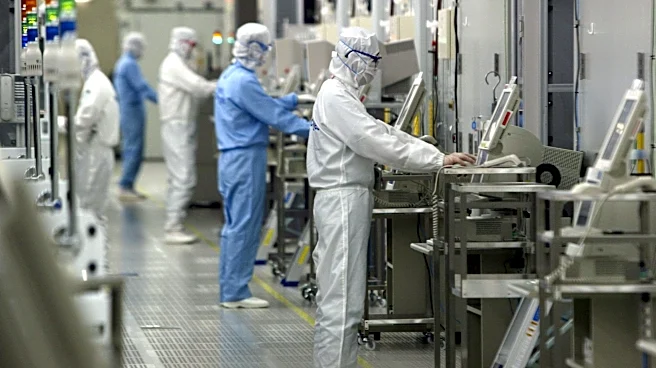
exports were the primary driver, totaling $56.47 billion, up 259.4% from the previous year, and accounting for 80.3% of total ICT exports. This growth is attributed to robust demand for high-performance memory, particularly DRAM (up 595.3%) and SSDs (up 584.3%), fueled by expanded artificial intelligence (AI) infrastructure investment. Exports to the United States alone jumped 522.4%. However, ICT exports by small and mid-sized companies grew only 10.3%, with their semiconductor exports actually falling 6.2%, indicating a significant concentration of the boom in large corporations.
Why It's Important?
This dramatic increase in South Korea's ICT exports, particularly semiconductors, has significant implications for the U.S. technology market and economy. As a major supplier of memory chips essential for AI data centers and other advanced computing, South Korea's export surge indicates a strong global demand for AI infrastructure, directly benefiting U.S. tech companies that rely on these components. The substantial increase in exports to the United States underscores the U.S.'s leading role in AI development and its reliance on international supply chains for critical hardware. However, the disparity in growth between large and small companies within the semiconductor sector highlights potential challenges for market diversity and competition, which could impact innovation and pricing in the long run.
What's Next?
The continued strength of the AI memory supercycle is expected to sustain high demand for South Korean semiconductors. The market will be watching for sustained price strength in memory products like DRAM and NAND. Future trends will depend on the pace of global AI infrastructure investment and how effectively the supply chain can meet this escalating demand. The challenge of ensuring more equitable growth across small and mid-sized companies within the ICT sector will also be a key area of focus, as their slower growth could impact the overall resilience and innovation capacity of the industry.
Beyond the Headlines
The unprecedented surge in South Korea's ICT exports, largely driven by AI, highlights the profound economic restructuring occurring globally due to artificial intelligence. This 'AI memory supercycle' is not merely a cyclical upturn but potentially a long-term shift in demand patterns, making advanced memory chips a critical strategic resource. The concentration of this boom in large corporations raises concerns about market power and the potential for smaller innovators to be left behind, which could lead to calls for policies aimed at fostering a more inclusive growth environment within the tech sector. Furthermore, the reliance of the U.S. on these exports underscores the interconnectedness of global technology supply chains and the geopolitical implications of semiconductor manufacturing dominance.