






What's Happening?
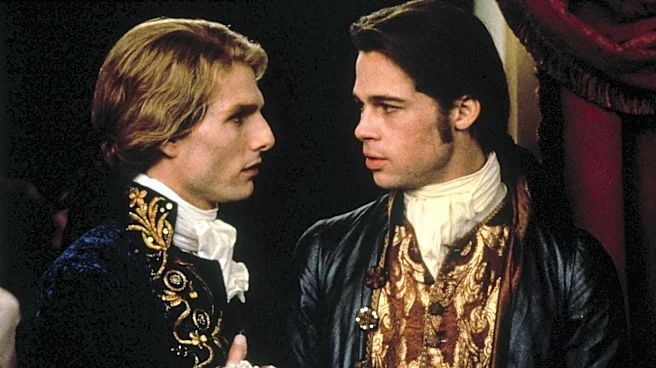
Tom Cruise's 1994 role as Lestat de Lioncourt in Neil Jordan’s adaptation of Anne Rice’s novel 'Interview with the Vampire' is being highlighted as his most notable horror performance. Despite his career largely focusing on action and dramatic hero roles,
this film marked a significant departure. Initially, author Anne Rice publicly criticized Cruise's casting, deeming him an unsuitable choice for the aristocratic vampire. However, after seeing the film, Rice reversed her stance, even publishing a two-page apology in The New York Times, acknowledging Cruise's exceptional portrayal. The film, which also stars Brad Pitt and a young Kirsten Dunst, showcases Cruise taking his leading-man persona and subverting it to create a complex and unsettling character.
Why It's Important?
This re-evaluation of Cruise's performance in 'Interview with the Vampire' is important because it challenges the conventional perception of his acting range and highlights a nuanced role often overshadowed by his more prominent action franchises. For the entertainment industry, it underscores how an actor's established persona can be effectively utilized to create compelling and unexpected characterizations, even when initially met with skepticism. The film's enduring cult following and critical re-appraisal demonstrate the lasting impact of strong performances and well-executed adaptations, influencing how audiences and critics perceive genre films and actor versatility. It also serves as a case study in overcoming initial public and authorial disapproval through the strength of the final artistic product.
What's Next?
The continued discussion and re-appraisal of 'Interview with the Vampire' could lead to renewed interest in the film and potentially influence future casting decisions for actors known for specific genres. For Tom Cruise, it reinforces his legacy as an actor capable of diverse roles beyond his action hero archetype. The success of the 2022 AMC TV adaptation of 'Interview with the Vampire' also suggests a sustained interest in Rice's universe, potentially prompting further adaptations or re-examinations of the original film's impact. This ongoing conversation contributes to the broader cultural dialogue about film history and the evolution of genre cinema.
Beyond the Headlines
Beyond its immediate impact on film criticism, the story of Cruise's casting and Anne Rice's subsequent apology offers a fascinating insight into the dynamics between authors, adaptations, and audience expectations. It highlights the often-contentious process of bringing beloved literary characters to the screen and the potential for actors to redefine roles in unexpected ways. The film's exploration of themes like immortality, loneliness, and the nature of evil, coupled with Cruise's performance, delves into deeper psychological and philosophical questions, making it more than just a horror movie. It also showcases the power of a performance to change public opinion and solidify a film's place in cinematic history, even decades after its initial release.