









What's Happening?
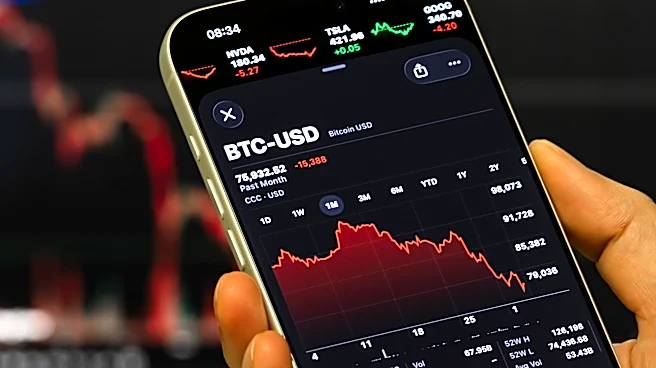
Bitcoin is currently trading below $60,000, placing it in a precarious position described as 'no man's land,' where its price is caught between significant on-chain support and resistance levels. The cryptocurrency has not managed to reclaim several critical
technical and on-chain thresholds, suggesting that the path of least resistance may continue to be downward. Key valuation metrics, such as the True Mean Price, 200-Day Moving Average, and Short Term Holder Cost Basis, are all positioned above Bitcoin's current price. These metrics provide insights into the average acquisition cost of coins, the long-term trend, and the average purchase price of short-term holders, respectively. Historically, during major bear market cycles, Bitcoin has bottomed out 5-10% below these key valuation metrics, indicating a potential downside target around $45,000.
Why It's Important?
The current trading position of Bitcoin below significant technical levels is crucial for investors and the broader cryptocurrency market. It highlights ongoing market weakness and the potential for further declines. This situation could impact investor sentiment and market dynamics, as Bitcoin often serves as a bellwether for the cryptocurrency market. A continued decline could lead to increased volatility and uncertainty, affecting both retail and institutional investors. Additionally, the inability to reclaim key technical levels may deter new investments and slow down the adoption of Bitcoin as a mainstream financial asset. The potential for a further drop to around $45,000 could also trigger broader market corrections, influencing other cryptocurrencies and related financial products.
What's Next?
If Bitcoin continues to trade below these critical levels, it may face increased selling pressure, potentially driving the price lower. Investors and market analysts will likely monitor these technical indicators closely to assess the likelihood of a market bottom. Should Bitcoin approach the $45,000 level, it could test the resilience of long-term holders and the broader market's ability to absorb further declines. Market participants may also look for signs of stabilization or recovery, such as a reclaiming of the 200-Day Moving Average, to signal a potential reversal in trend. The response from institutional investors and the impact of macroeconomic factors, such as interest rates and regulatory developments, will also play a significant role in shaping Bitcoin's future trajectory.