



What's Happening?
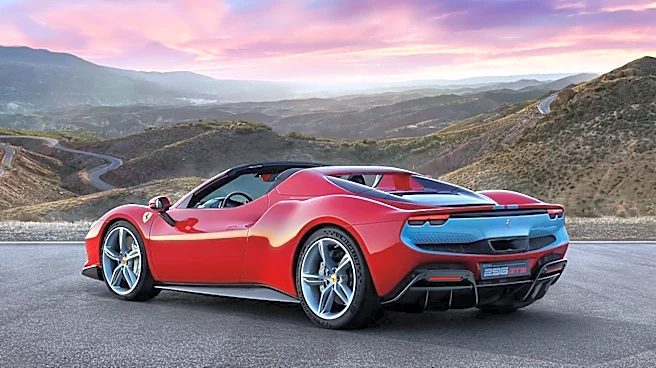
A comparison has been made between the Ferrari 296 and the Nissan Sentra, focusing on their dimensions, weight, and starting prices. The Ferrari 296 measures 179.9 inches in length, 77.1 inches in width, and 46.7 inches in height, with a starting MSRP
of $342,205. In contrast, the Nissan Sentra is 183 inches long, 71.5 inches wide, and 57.1 inches tall, with a significantly lower starting price of $24,265. The Nissan Sentra is 3.1 inches longer, 5.6 inches narrower, and 10.4 inches taller than the Ferrari 296. The Ferrari 296 has a 102.4-inch wheelbase, while the Nissan Sentra has a 106.5-inch wheelbase, a difference that is primarily felt in the back seat. Both vehicles fall between the typical size of a compact car and a large SUV.
Why It's Important?
This comparison highlights the vast differences in vehicle segments and target markets within the automotive industry. The Ferrari 296, as a high-performance convertible, represents the luxury and exotic car market, catering to consumers seeking speed, prestige, and advanced engineering, reflected in its high price point. The Nissan Sentra, a sedan, targets the mass market with an emphasis on affordability, practicality, and fuel efficiency. The significant price disparity of over $300,000 between the two models underscores the diverse economic strata and consumer preferences that drive the U.S. automotive market. This comparison also illustrates how different design philosophies lead to varying dimensions, with the Ferrari prioritizing a low-slung, wide stance for performance, and the Sentra opting for a more upright, narrower profile for urban maneuverability and interior space.
What's Next?
Automotive manufacturers will continue to innovate within their respective market segments, with Ferrari likely focusing on developing new high-performance hybrid and electric powertrains to meet evolving environmental regulations and consumer demands in the luxury sector. Nissan will probably continue to refine its Sentra model with updates to technology, safety features, and fuel efficiency to maintain its competitive edge in the compact sedan market. Future comparisons might delve into performance metrics, interior features, and technological advancements, further differentiating these vehicles for potential buyers. The ongoing evolution of vehicle design and technology will likely lead to even greater specialization and diversification across the automotive landscape.
Beyond the Headlines
The stark contrast between the Ferrari 296 and the Nissan Sentra extends beyond mere specifications, reflecting broader societal values and economic stratification. The Ferrari embodies aspirational luxury and technological prowess, often serving as a status symbol and a testament to engineering excellence. Its ownership signifies a certain level of wealth and a passion for automotive artistry. Conversely, the Nissan Sentra represents accessibility and utility, providing reliable transportation for a wide demographic. This comparison subtly highlights the economic disparities present in the U.S., where a small segment of the population can afford ultra-luxury vehicles, while the majority relies on more economical options. It also touches upon the environmental impact of different vehicle types, with high-performance cars often having a larger carbon footprint, though Ferrari is increasingly investing in hybrid technologies.