






What's Happening?
The commercial ice production industry is experiencing a significant transformation through automation, driven by increasing labor costs, stricter consistency requirements, and the need for more efficient use of water and energy. This shift moves ice manufacturing
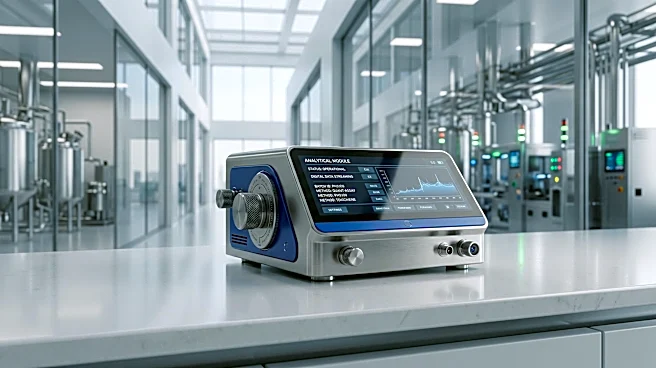
from a manually supervised process to one that is monitored, controlled, and documented. Key changes include automated freezing cycles that replace manual timing, ensuring consistent ice quality. Sensors and real-time monitoring systems are now integrated into equipment, providing continuous data on machine health and water quality, allowing operators to proactively address issues and prevent downtime. Water handling processes, such as filtration and impurity management, are also being automated to improve ice quality and reduce waste. Manufacturers are also focusing on energy and load optimization, enabling systems to schedule production during off-peak hours and operate at more efficient load points. Quality control is becoming standardized and built into the manufacturing process, with equipment tested before leaving the factory, leading to buyers demanding certifications and testing records. Finally, modular and scalable production lines are being developed to allow businesses to expand capacity as needed, with automation coordinating multiple machines as a single system.
Why It's Important?
This automation trend in commercial ice production is crucial for various U.S. industries, including hospitality, restaurant groups, event caterers, seafood processors, and cold chain operators, all of whom rely on a consistent and high-quality ice supply. The shift addresses critical operational challenges such as rising labor expenses and the need for greater efficiency. By ensuring repeatability and reducing human error, businesses can maintain product standards, which is vital for customer satisfaction and brand reputation. The integration of real-time monitoring helps prevent costly equipment failures and unplanned service interruptions, directly impacting operational continuity and profitability. Furthermore, optimized energy and water usage contribute to lower operating costs and align with growing sustainability demands, making efficiency a key factor in procurement decisions. This evolution positions ice machines as industrial equipment with traceable quality, moving beyond mere price and appearance considerations, and setting new benchmarks for reliability and performance in the U.S. market.
What's Next?
The trajectory for commercial ice production points towards a fully monitored, controlled, and documented manufacturing process, mirroring advancements in other industrial sectors. For buyers in the U.S., this means a shift in purchasing criteria, moving beyond just production volume to focus on consistency, monitoring capabilities, energy and water efficiency, and verifiable testing and certifications. Manufacturers who can provide data-backed answers to these questions will gain a competitive advantage as hospitality, food processing, and cold chain operators continue to raise their expectations for equipment performance and reliability. This will likely lead to increased investment in advanced automation technologies and a greater emphasis on data analytics in the design and operation of ice production systems. The industry will see continued innovation in modular designs and integrated control systems, allowing for more flexible and scalable ice production solutions to meet fluctuating market demands.
Beyond the Headlines
The automation of commercial ice production highlights a broader industrial trend where even seemingly simple manufacturing processes are being revolutionized by technology. This development underscores the increasing pressure on U.S. businesses to adopt advanced solutions to remain competitive, not just in terms of cost but also in quality and sustainability. The demand for verifiable quality and efficiency reflects a growing consumer and regulatory emphasis on transparency and environmental responsibility across supply chains. This shift could also lead to a re-evaluation of labor roles within the industry, moving from manual operation to oversight and maintenance of automated systems, requiring new skill sets. The unglamorous aspects of manufacturing, like ice production, are now receiving the same engineering attention as more visible sectors, indicating a comprehensive push towards industrial optimization and technological integration across all facets of the U.S. economy.