


What's Happening?
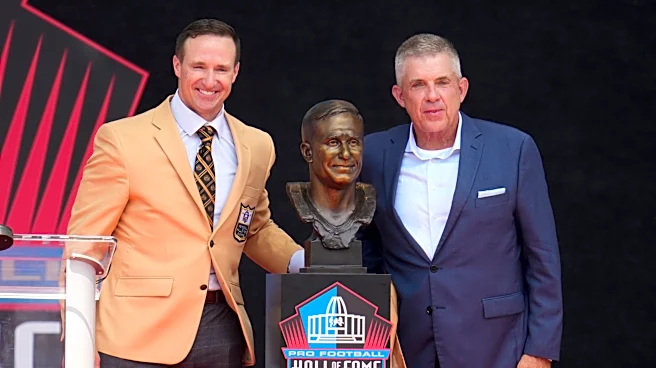
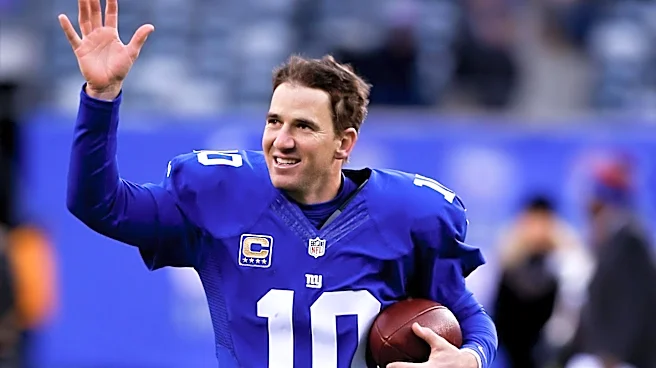
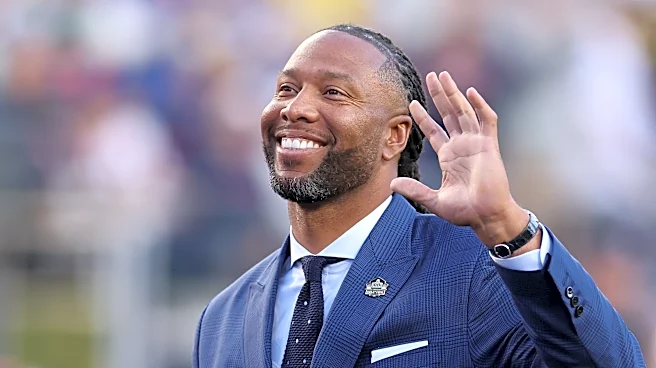
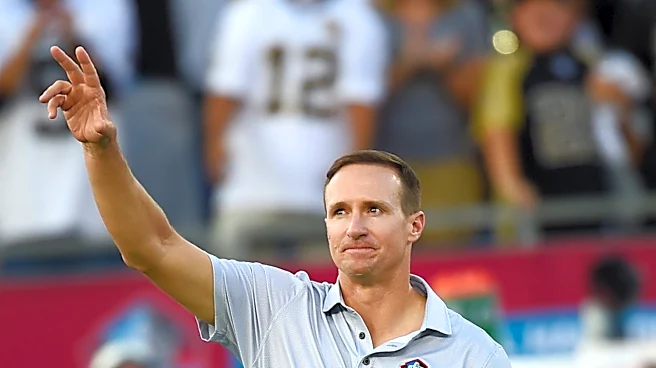
Eli Manning, renowned for his two Super Bowl victories with the New York Giants, was not inducted into the Pro Football Hall of Fame in the 2026 class. Despite being a finalist, Manning did not receive enough votes to join the likes of Drew Brees and
Larry Fitzgerald, who were inducted this year. Manning's career, marked by iconic playoff performances and a record of 210 consecutive starts, has sparked debate over his Hall of Fame credentials. Critics point to his lack of individual accolades, such as All-Pro selections or MVP awards, as reasons for his exclusion. However, supporters argue that his contributions to the Giants' Super Bowl victories and his durability make a strong case for his eventual induction.
Why It's Important?
Eli Manning's exclusion from the Hall of Fame underscores the ongoing debate about the criteria for induction, particularly for quarterbacks. Manning's career highlights the tension between individual accolades and team achievements in evaluating a player's legacy. His absence from the Hall of Fame is a significant point of discussion among Giants fans and NFL analysts, as it raises questions about how success is measured in professional football. The decision also impacts Manning's legacy and the perception of his contributions to the sport, influencing future considerations for Hall of Fame inductions.
What's Next?
Giants fans and supporters of Eli Manning will likely continue to advocate for his induction into the Hall of Fame in future years. The debate over his credentials may prompt discussions within the Hall of Fame selection committee about the criteria used to evaluate candidates. Manning's career will continue to be analyzed and celebrated, particularly his role in the Giants' Super Bowl victories. As the Hall of Fame process evolves, Manning's case may serve as a reference point for evaluating other players with similar career profiles.