






What's Happening?
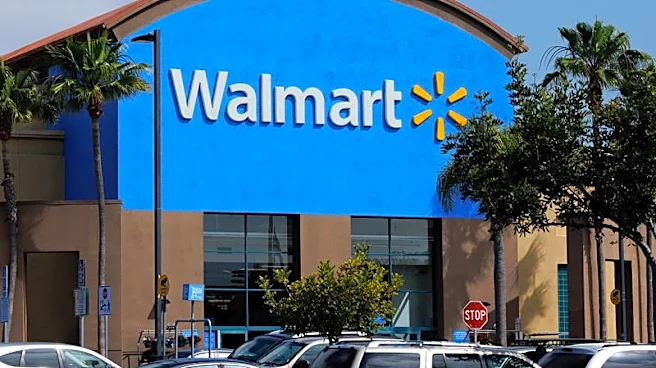
Walmart has reported a slowdown in its U.S. same-store sales growth, reaching its slowest pace since Q4 2020, despite exceeding Wall Street's overall revenue and earnings estimates. The retail giant's stock dropped following the announcement, which indicated
a 2.6% increase in U.S. same-store sales, falling short of the 3.7% forecast. This deceleration was partly attributed to lower drug prices, influenced by maximum fair price legislation allowing Medicare to negotiate drug prices, and a decrease in GLP-1 adoption. Walmart's Chief Financial Officer, John David Rainey, noted that rising fuel prices, exceeding $4, led consumers to make 'trade-offs,' particularly impacting sales in June. The company also revealed it received substantial tariff refunds, approximately 0.5% of its U.S. annual sales, totaling around $2.9 billion. These funds are being reinvested into customer experience and price leadership, focusing on grocery and general merchandise categories to attract cost-conscious consumers. E-commerce sales, however, showed strong growth, increasing by 23% overall and 24% in the U.S., partly due to promotions aimed at competing with Amazon's Prime Day.
Why It's Important?
Walmart's performance is often seen as a bellwether for the broader U.S. retail industry and consumer spending health. The reported slowdown in sales growth, coupled with consumer 'trade-offs' due to higher fuel prices, signals potential headwinds for the retail sector and the overall economy. The company's strategy to reinvest significant tariff refunds into price cuts highlights the direct impact of trade policies on consumer pricing and retail competition. This move could intensify price wars, benefiting consumers in the short term but potentially squeezing profit margins for other retailers. The influence of government legislation on drug prices, leading to lower sales growth in health and wellness, underscores how regulatory changes can directly affect major retailers' revenue streams. Furthermore, the robust growth in e-commerce sales, even amidst overall sales deceleration, emphasizes the ongoing shift in consumer behavior towards online shopping and the critical importance for retailers to maintain a strong digital presence and competitive online promotions.
What's Next?
Walmart's guidance for the third quarter anticipates net sales to increase by 3% to 3.75%, with adjusted earnings projected between $0.62 and $0.64. For fiscal year 2027, the company forecasts revenue growth of 4%-5% and adjusted earnings of $2.80-$2.87, which is more conservative than initial Wall Street predictions. The continued prioritization of tariff refunds and price investments will likely remain a key strategy for Walmart to stimulate sales and attract consumers during the crucial back-to-school and holiday shopping seasons. The retail giant will continue to monitor fuel prices and consumer spending habits, adjusting its pricing and promotional strategies accordingly. Competitors will also be watching Walmart's moves closely, as its aggressive pricing due to tariff refunds could force other retailers to re-evaluate their own pricing strategies to remain competitive. The ongoing impact of drug price legislation on the health and wellness sector will also be a factor to watch, potentially influencing future sales and strategic decisions within that segment.
Beyond the Headlines
The reinvestment of tariff refunds into price cuts by a retail giant like Walmart has broader implications for the U.S. economic landscape. While seemingly beneficial for consumers through lower prices, it also reflects the complex interplay between international trade policies, corporate financial strategies, and domestic consumer welfare. The slowdown in sales growth, attributed partly to higher gas prices, points to the persistent vulnerability of consumer spending to external economic factors, highlighting the delicate balance of household budgets. This situation could exacerbate economic inequalities, as lower-income households are disproportionately affected by rising essential costs like fuel. The strong e-commerce performance, contrasted with slower in-store sales, further accelerates the transformation of the retail industry, pushing traditional brick-and-mortar stores to innovate or risk losing market share. This shift also raises questions about the future of retail employment and the evolving skill sets required in a digitally dominant retail environment. The strategic use of tariff refunds by Walmart could set a precedent for how other large corporations manage similar windfalls, potentially influencing market dynamics and consumer expectations across various sectors.