




What's Happening?
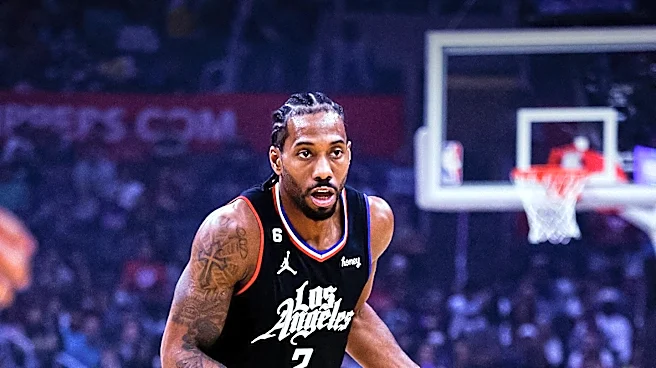
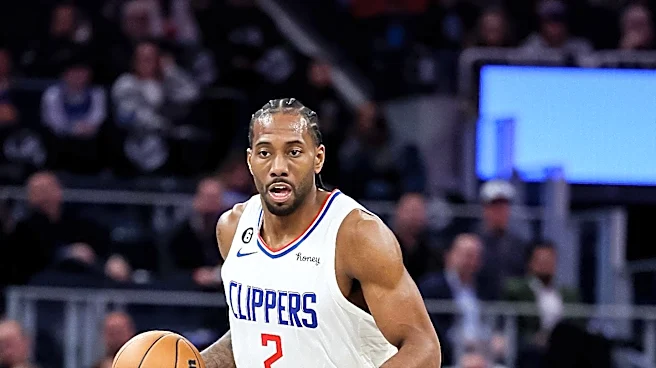
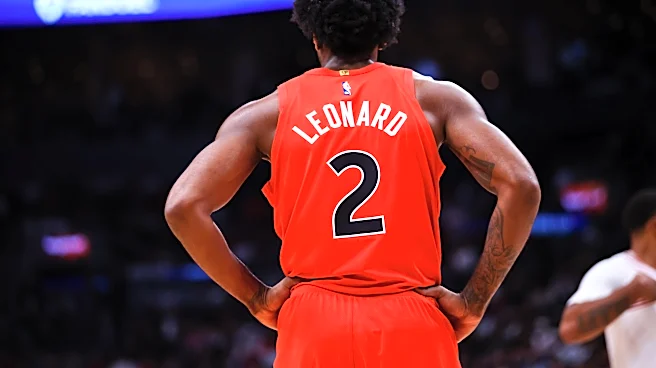
NBA legend Charles Barkley has expressed admiration for Toronto Raptors star Kawhi Leonard's exceptional ability to return to peak performance immediately after suffering injuries, a trait Barkley claims he has 'never seen anyone' else possess in his
40 years in the NBA. Leonard is currently expected to be out for a few weeks due to a knee injury, adding to a history of injuries throughout his career. While some, like ESPN host Stephen A. Smith, have criticized Leonard for missing numerous games, Barkley focuses on the unique way Leonard avoids the typical 'rust' that affects most players returning from extended absences. Barkley highlighted that Leonard can miss significant time, even months or a year, and still perform at a high level upon his return, appearing as if he hasn't missed a beat.
Why It's Important?
Charles Barkley's observation about Kawhi Leonard's ability to bypass the 'rust' period after injuries is significant because it challenges conventional wisdom in professional sports regarding player recovery and performance. Typically, athletes require a period of adjustment to regain their form and rhythm after an injury layoff. Leonard's apparent exception to this rule suggests a unique combination of physical conditioning, mental fortitude, and perhaps a highly efficient rehabilitation process. This phenomenon could influence how teams manage injured star players, potentially altering expectations for their return timelines and immediate impact. For the Raptors, having a player who can seamlessly re-integrate into the lineup without a performance dip is a considerable advantage, especially in critical playoff scenarios. It also sparks debate among sports analysts and fans about what makes Leonard's recovery process so distinct.
What's Next?
As Kawhi Leonard recovers from his current knee injury, the basketball world will be watching closely to see if he once again defies expectations by returning without any noticeable 'rust.' His performance upon rejoining the Toronto Raptors will serve as further evidence for or against Charles Barkley's assessment. If Leonard continues to demonstrate this unique ability, it could lead to more in-depth studies into his training regimens, recovery protocols, and mental preparation. This could potentially influence sports science and rehabilitation practices across the NBA and other professional leagues. The ongoing debate about his injury history versus his immediate impact upon return will likely continue to be a prominent topic among sports commentators and fans, shaping perceptions of his legacy as a player who, despite injuries, consistently performs at an elite level.
Beyond the Headlines
Kawhi Leonard's unusual ability to return from injury without 'rust' delves into the deeper psychological and physiological aspects of elite athletic performance. Beyond the physical recovery, it suggests an extraordinary level of muscle memory, mental resilience, and perhaps a unique approach to maintaining peak physical condition even during periods of inactivity. This phenomenon raises questions about the nature of athletic 'rust' itself—is it purely physical, or does it have a significant mental component? Leonard's case could imply that for certain athletes, the mental aspect of maintaining readiness and confidence is so strong that it overrides the typical physical degradation associated with time off. This could have implications for understanding the psychology of high-performance athletes and the role of mental training in injury recovery, suggesting that some individuals possess an innate capacity to bypass common performance setbacks, making them truly exceptional in their field.