





What's Happening?
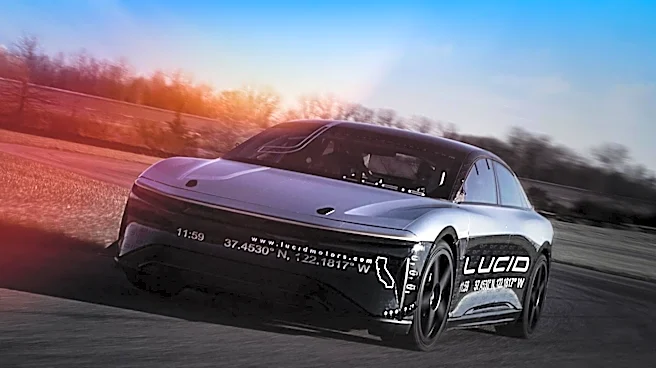
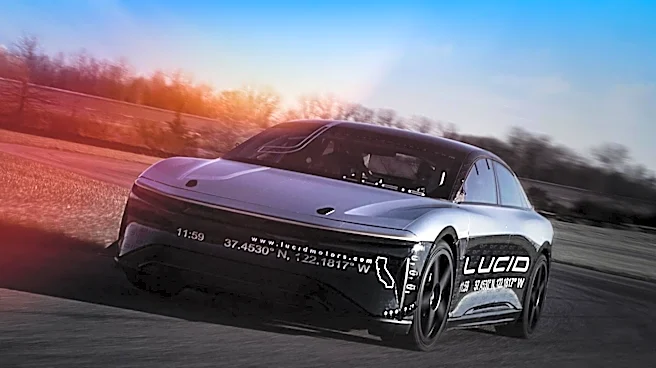
Lucid Motors, an American electric vehicle manufacturer known for its luxury electric cars and SUVs, is currently navigating significant challenges in production scaling and achieving profitability. Despite possessing advanced technology, the company's
execution and product portfolio are not aligning with current market demands, which heavily favor SUVs over sedans. The Lucid Air sedan is struggling to gain traction, and the upcoming Gravity SUV is anticipated to be too expensive for a broad segment of EV buyers. This situation has placed Lucid in a precarious financial position, as highlighted by its stock performance, which saw a 5.6% drop in mid-day trading. The company's financial reports indicate a negative net margin of 249.21% and a negative return on equity of 1,391.51%, with a reported earnings per share of ($2.78) against an estimated ($2.36). Analysts have adjusted their ratings and price targets for Lucid, reflecting concerns about its path to profitability. The company's production increased by 24% year-over-year to 4,774 vehicles in the second quarter, with deliveries up 19% to 3,953 vehicles, and revenue increasing by 56% to approximately $405 million. However, the cost of goods sold rose significantly, leading to a worsening gross margin of -112.6% in the first half of the year.
Why It's Important?
Lucid Motors' struggles are significant for the broader U.S. electric vehicle industry, serving as a cautionary tale for other EV startups. The company's inability to translate technological superiority into market success and profitability underscores the intense competition and capital-intensive nature of the EV sector. For consumers, Lucid's challenges could impact the diversity of luxury EV options and potentially delay the widespread adoption of high-end electric vehicles if manufacturers cannot sustain operations. Investors are closely watching Lucid as its performance influences sentiment towards other emerging EV companies, particularly those with high production costs and ambitious scaling plans. The company's financial health, characterized by substantial operating losses and stock dilution, highlights the risks associated with investing in early-stage automotive manufacturers. Furthermore, Lucid's situation reflects a broader market trend where consumer preference for SUVs over sedans is dictating product development and sales strategies, forcing EV manufacturers to adapt or face market irrelevance. The company's ongoing efforts to scale production while managing high costs will be a key indicator for the viability of other luxury EV brands in the U.S. market.
What's Next?
Lucid Motors will likely need to re-evaluate its product strategy and operational efficiencies to address its current market and financial challenges. A critical next step will be the successful launch and market acceptance of its Gravity SUV, which needs to overcome its anticipated high price point to attract a substantial customer base. The company may also need to explore additional funding rounds, potentially leading to further stock dilution, to sustain its operations and invest in necessary production scaling and technological advancements. Analysts will continue to monitor Lucid's quarterly earnings reports for any signs of improved gross margins, reduced losses, and increased delivery numbers that align with market expectations. The company's ability to streamline its supply chain and control manufacturing costs will be crucial for its long-term viability. Furthermore, Lucid might consider strategic partnerships or collaborations to leverage its technological advantages and expand its market reach, similar to how other EV companies are exploring alliances to share development costs and market risks. The broader EV market's shift towards more affordable and diverse vehicle types will also pressure Lucid to adapt its luxury-focused approach or risk being marginalized.
Beyond the Headlines
Lucid Motors' trajectory highlights a deeper industry-wide challenge: the difficulty of achieving profitability in the electric vehicle sector, even with a premium product and advanced technology. This situation raises questions about the long-term sustainability of numerous EV startups that aim to compete with established automotive giants and market leaders like Tesla. The capital intensity of automotive manufacturing, coupled with evolving consumer preferences and supply chain complexities, creates a high barrier to entry and sustained success. Ethically, the pressure to scale rapidly can lead to compromises in quality or labor practices, though there is no indication of such issues at Lucid. Legally, the financial struggles could lead to increased scrutiny from regulators and investors, particularly regarding financial reporting and future projections. Culturally, Lucid's struggle to shift consumer perception from traditional luxury sedans to electric alternatives, especially in a market increasingly dominated by SUVs, reflects a broader societal trend in vehicle preferences. The company's experience could influence future investment patterns in the EV space, potentially steering capital towards companies with more diversified product lines or those that have already demonstrated a clear path to profitability.