








What's Happening?
Filmmaker Kore-eda Hirokazu, whose AI-themed film 'Sheep in the Box' premiered at the Cannes Film Festival, revealed he discarded script notes generated by an AI chatbot. According to Variety, Kore-eda engaged with the chatbot, which he nicknamed 'Chat-kun,'
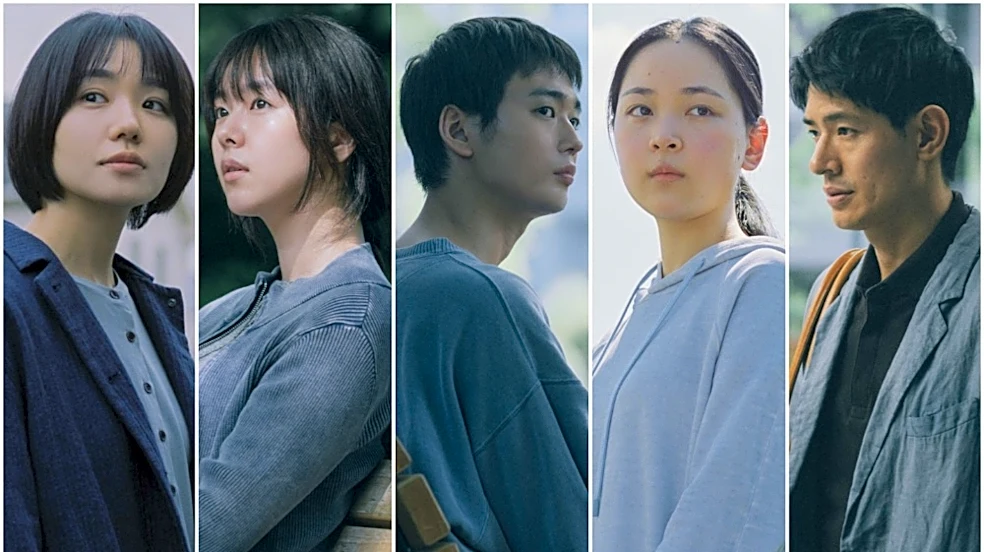
to review his screenplay. Despite the AI providing 'correct' feedback, including a suggestion to further develop the protagonist's mother, Kore-eda found the advice 'boring' and ultimately unhelpful. He concluded that the chatbot lacked the personal history and life experience necessary to offer meaningful cinematic insights. 'Sheep in the Box' is set in the near future and tells the story of a couple who adopt a humanoid robot built from data of their deceased 7-year-old son. Ayase Haruka plays Otone, an architect who cares for the robot, while Yamamoto Daigo portrays her husband Kensuke, who views it merely as a machine. Kore-eda emphasized his desire to 'stand on the human side' of filmmaking and intends to minimize AI involvement in his creative process.
Why It's Important?
Kore-eda Hirokazu's decision to reject AI-generated script notes highlights a growing debate within the creative industries regarding the role and value of artificial intelligence in artistic endeavors. This event underscores the perceived limitations of AI in understanding and contributing to the nuanced, experience-driven aspects of human creativity. For the film industry, it raises questions about the future of screenwriting, directing, and artistic development, suggesting that while AI can process vast amounts of data and identify patterns, it may struggle with the subjective, emotional, and deeply personal elements that define compelling storytelling. This stance by a renowned filmmaker like Kore-eda could influence other artists to critically evaluate AI's utility, potentially fostering a greater appreciation for human intuition and lived experience in creative fields. It also serves as a commentary on the potential for AI to produce 'correct' but ultimately uninspired or formulaic content, prompting a re-evaluation of what truly constitutes artistic merit.
What's Next?
The discussion initiated by Kore-eda's experience is likely to continue shaping conversations around AI's integration into creative processes. As AI technology advances, filmmakers and artists will increasingly face decisions about how much, if any, artificial intelligence to incorporate into their work. This event may encourage further exploration into the ethical and philosophical implications of AI in art, particularly concerning originality, authenticity, and the human element. It could also lead to a clearer delineation of tasks where AI is deemed beneficial (e.g., technical assistance, data analysis) versus those where human creativity remains paramount (e.g., narrative development, emotional depth). The film 'Sheep in the Box' itself, with its AI theme, will likely contribute to this ongoing dialogue, prompting audiences and critics to consider the very questions Kore-eda grappled with during its creation.
Beyond the Headlines
Kore-eda's rejection of AI notes delves into the deeper philosophical question of what constitutes art and creativity. His assertion that a chatbot, despite its data processing capabilities, lacks the 'personal history with cinema' or a 'film that changed its life' speaks to the irreplaceable value of human experience and subjective interpretation in artistic expression. This perspective challenges the notion that art can be optimized or perfected through algorithmic analysis alone. It suggests that the 'boring' nature of AI's 'correct' feedback stems from its inability to grasp the irrational, the unexpected, and the deeply personal elements that often make art profound and resonant. This incident could spark broader cultural conversations about the essence of humanity in an increasingly AI-driven world, emphasizing that true creativity often emerges from imperfection, personal struggle, and the unique lens of individual experience, rather than from flawless, data-driven logic.