







What's Happening?
Adidas, H&M Group, Inditex, and Bestseller have formed the Apparel Recovery Coalition (ARC) in Accra, Ghana, to directly confront the overwhelming textile waste crisis in the region. This initiative, launched on September 29, 2026, aims to tackle the environmental
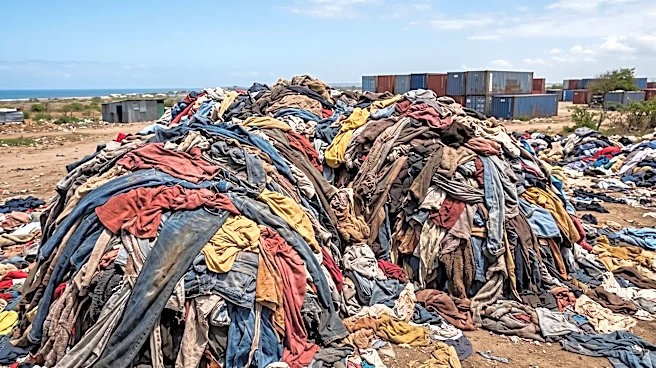
pollution caused by the approximately 25 million secondhand garments that arrive monthly at Kantamanto Market. While this influx fuels a local economy of reuse, repair, and upcycling, it also generates a massive amount of textile waste that severely contaminates local soil and water. The European Union alone exports around 1.4 million metric tons of used textiles to Africa and Asia annually, with existing Extended Producer Responsibility (EPR) policies failing to address the downstream environmental impact in recipient nations. ARC, supported by the circularity nonprofit Circle Economy, seeks to channel voluntary funds from global fashion brands to these affected regions. This represents a direct effort by multinational corporations to take accountability for the environmental consequences of their production beyond the point of sale, signaling a significant shift in how product lifecycles are defined and managed.
Why It's Important?
The formation of the Apparel Recovery Coalition marks a critical development in the global fashion industry's approach to sustainability and corporate responsibility. This initiative is significant because it directly addresses the issue of 'waste colonialism,' where developed nations export their textile waste to developing countries, leaving local communities to bear the environmental burden without adequate resources for processing. By channeling voluntary funds to recipient regions, ARC attempts to rectify a fundamental flaw in current regulatory frameworks like EPR, which typically only hold manufacturers accountable in the country of sale. This move could set a precedent for other industries to take greater responsibility for the end-of-life impact of their products globally. For product designers and business strategists, it necessitates a fundamental re-evaluation of product lifecycle design, emphasizing material selection and ease of disassembly from the outset. The success or failure of this two-year pilot will indicate whether voluntary corporate action can genuinely transform global supply chains or merely serve as a temporary public relations measure, influencing future regulatory pressures and brand ethical values.
What's Next?
The Apparel Recovery Coalition's two-year pilot program in Accra will serve as a crucial test for the effectiveness of voluntary corporate action in addressing global textile waste. During this period, the coalition will assess whether the channeled funds can significantly mitigate the environmental damage caused by secondhand garment imports and establish viable systems for textile recovery and processing. The initiative will also highlight the technical and infrastructural challenges of sorting complex fiber blends in developing markets. As global regulations on waste management continue to tighten, the outcomes of ARC's pilot will likely influence future corporate strategies and potentially shape new international policies regarding textile waste. Businesses will be closely watching to determine if this model can genuinely transform supply chains or if more stringent, legally binding frameworks will be necessary. The fashion industry will need to decide how to integrate the true end-of-life impact of their goods into their core business models, moving beyond mere compliance to proactive, ethical design and production practices. The experiment will also gauge the willingness of major brands to sustain financial contributions to address post-consumer waste overseas.
Beyond the Headlines
The Apparel Recovery Coalition's initiative in Ghana delves into deeper ethical and systemic implications within the global economy. It highlights the moral imperative for corporations to address the externalities of their production, particularly when those burdens disproportionately affect vulnerable communities in the Global South. This move implicitly acknowledges the historical inequities embedded in global trade and consumption patterns. Beyond environmental concerns, the initiative touches upon economic justice, as it seeks to provide resources to regions that have historically been exploited as dumping grounds. The success of ARC could foster a new paradigm of 'circular economy' principles that extend beyond national borders, demanding that product design inherently considers global end-of-life scenarios. However, the challenge remains significant, as the sheer volume of textile production from brands like Inditex and H&M continues to grow, raising questions about whether post-consumer financial contributions can truly offset an ever-increasing output. This initiative also underscores the limitations of current regulatory frameworks and the potential for corporate leadership to drive change where policy has lagged, while simultaneously raising questions about the long-term commitment and scalability of such voluntary efforts.