


What's Happening?
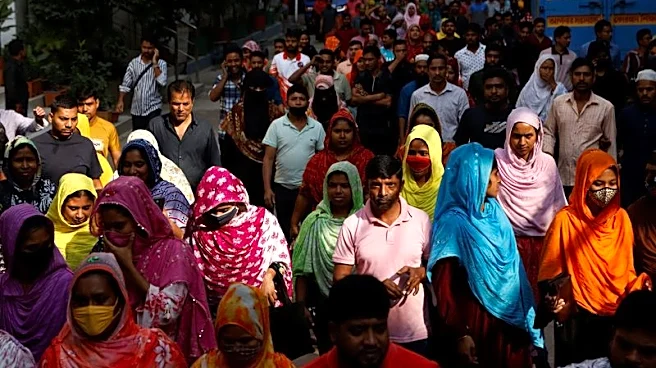
Global fashion retailers, including Zara and H&M, have shifted approximately 10% of their monthly orders from Bangladesh to other Asian manufacturing hubs, primarily India, during the first half of November. This diversion, amounting to about $254 million,
is a direct consequence of labor unrest, rising operational costs, and political uncertainty in Bangladesh. The country, which is the world's second-largest apparel exporter, has seen its competitive edge erode due to these factors. The Bangladesh Garment Manufacturers and Exporters Association (BGMEA) estimates production losses exceeding $400 million due to the protests. The situation intensified with a 36% increase in the minimum wage for garment workers, which, despite being the smallest rise in four decades, still fell short of workers' demands, leading to further clashes. This wage increase is expected to further narrow Bangladesh's labor-cost advantage over India.
Why It's Important?
This shift in manufacturing orders has significant implications for the global apparel industry and the economies of Bangladesh and India. For Bangladesh, the diversion represents a major blow to its economy, as the garment industry accounts for over 80% of its export earnings and nearly 40% of its manufacturing jobs. The loss of orders, coupled with persistent energy shortages and political instability, threatens the long-term viability of its apparel sector. Conversely, India stands to gain substantially, with its textile shares rallying following the news. Other countries like Vietnam, Cambodia, and Indonesia are also benefiting as brands seek to diversify their supply chains and improve delivery reliability. This trend highlights a broader re-evaluation by global brands of their sourcing strategies, prioritizing stability and efficiency over solely low-cost production.
What's Next?
The immediate future for Bangladesh's garment industry hinges on restoring stability and ensuring uninterrupted production to regain buyer confidence. Industry leaders warn that temporary shifts in orders could become permanent if instability persists. Manufacturers are facing production backlogs and are considering costly measures like overtime and air freight to meet existing commitments. The recent wage increase, while intended to address worker demands, has not fully appeased them, suggesting potential for continued unrest. For India and other beneficiary nations, this presents an opportunity to solidify their positions as alternative manufacturing hubs. The long-term impact will depend on how effectively Bangladesh addresses its internal challenges and how other Asian countries capitalize on the increased demand.
Beyond the Headlines
The situation in Bangladesh underscores the complex interplay between labor rights, economic competitiveness, and global supply chain dynamics. While the immediate cause is labor unrest and rising costs, deeper issues such as political stability and energy infrastructure play a crucial role. The ethical implications for global brands are also significant; while they seek cost-effective production, they also face pressure to ensure fair labor practices and stable working conditions. This event could accelerate a broader trend of supply chain diversification, moving away from over-reliance on single-country sourcing. It also highlights the vulnerability of economies heavily dependent on a single industry to internal disruptions and external market pressures, prompting a re-evaluation of economic diversification strategies.