







What's Happening?
The Mosaic Company (MOS), headquartered in Tampa, Florida, is a major producer and marketer of concentrated phosphate and potash crop nutrients. The company operates through three primary segments: Phosphates, Potash, and Mosaic Fertilizantes. Mosaic owns
and manages mines and production facilities across various countries, including the United States, Brazil, China, and Canada. These facilities are responsible for producing concentrated phosphate crop nutrients, such as diammonium phosphate (DAP), monoammonium phosphate (MAP), and MicroEssentials, which is a value-added ammoniated phosphate product. Additionally, Mosaic mines, processes, and sells potash to a diverse customer base that includes crop nutrient manufacturers, distributors, retailers, and industrial users. The company also produces phosphate-based animal feed ingredients and a double sulfate of potash magnesia product under the K-Mag brand. Mosaic's extensive operations include chemical plants, crop nutrient blending and bagging facilities, port terminals, and warehouses, facilitating both domestic and international distribution of its products.
Why It's Important?
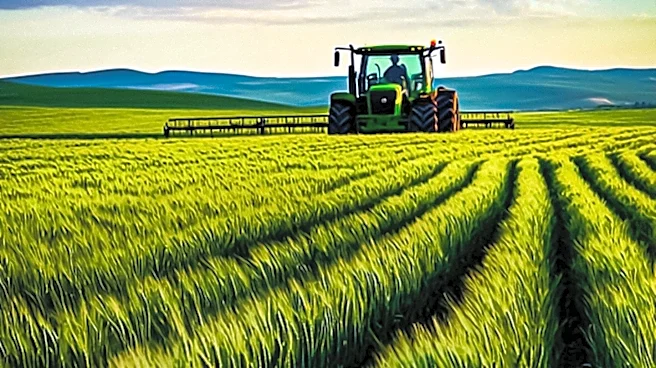
The Mosaic Company's operations are critical to global agriculture, as phosphate and potash are essential nutrients for crop growth and yield. Its widespread presence, with facilities in key agricultural regions like the United States and Brazil, underscores its role in the global food supply chain. The company's production of various phosphate and potash products, including specialized blends like MicroEssentials, helps farmers optimize crop nutrition and improve agricultural productivity. This is particularly important in an era of increasing global food demand and the need for sustainable agricultural practices. Mosaic's ability to supply these vital nutrients to manufacturers, distributors, and retailers directly impacts the cost and availability of fertilizers for farmers worldwide, influencing food prices and agricultural output. Furthermore, its involvement in animal feed ingredients highlights its broader contribution to the livestock industry.
What's Next?
As a key player in the agricultural inputs sector, The Mosaic Company will likely continue to focus on optimizing its global production and distribution networks to meet evolving agricultural demands. Future developments may include further investments in sustainable mining practices and the development of enhanced crop nutrient products to address specific soil and crop needs. The company's performance will remain sensitive to global agricultural commodity prices, weather patterns affecting crop yields, and international trade policies impacting fertilizer markets. Stakeholders, including farmers, agricultural businesses, and investors, will closely monitor Mosaic's operational efficiency, market strategies, and any expansions or technological advancements aimed at improving nutrient delivery and environmental stewardship. The company's ability to navigate geopolitical factors and supply chain disruptions will also be crucial for its continued success and impact on the global agricultural landscape.
Beyond the Headlines
The operations of The Mosaic Company extend beyond mere commodity production, touching upon critical environmental and economic considerations. The mining and processing of phosphate and potash involve significant environmental management challenges, including land reclamation, water usage, and waste management. The company's commitment to sustainable practices and responsible resource extraction is therefore a key aspect of its long-term viability and public perception. Economically, Mosaic's global reach means it plays a role in the economic stability of various regions where it operates, providing employment and contributing to local economies. The ethical dimension of fertilizer production also comes into play, as the availability and affordability of these nutrients directly impact food security in developing nations. Therefore, Mosaic's strategic decisions regarding pricing, distribution, and environmental responsibility have far-reaching implications for global food systems and sustainable development.