



What's Happening?
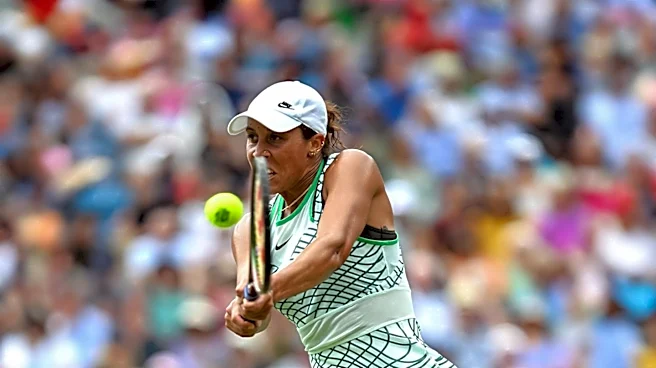
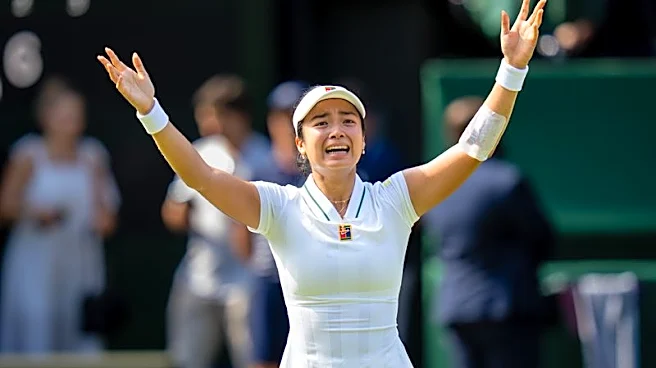
Alex Eala, a 21-year-old tennis player from the Philippines, achieved a significant victory at the Wimbledon Championships by defeating the defending champion, Iga Swiatek of Poland. Eala won the match with a score of 7-6 (9), 6-2, securing her place
in the round of 16. This victory is particularly notable as Swiatek is a six-time major champion and was ranked third in the world. Eala's win is a milestone in her career, marking her first advancement to the fourth round of a Grand Slam tournament. The match was a testament to Eala's skill and determination, as she saved two set points in the first set and dominated the second set to clinch the victory.
Why It's Important?
Eala's victory is significant not only for her personal career but also for the representation of Filipino athletes on the global stage. Tennis is considered a niche sport in the Philippines, and Eala's success could inspire a new generation of players in the country. Her win against a top-ranked player like Swiatek highlights her potential to compete at the highest levels of the sport. This achievement may also increase visibility and support for tennis in the Philippines, potentially leading to more resources and opportunities for aspiring players. Eala's performance demonstrates the growing diversity and competitiveness in women's tennis.
What's Next?
Following her victory, Alex Eala will face Jasmine Paolini of Italy, a 2024 Wimbledon finalist, in the next round. This match will be another challenging test for Eala as she aims to secure a spot in the quarterfinals. Her continued success in the tournament could further elevate her profile and open up more opportunities for sponsorships and endorsements. Additionally, Eala's performance may attract more attention from tennis fans and media, increasing her influence and impact within the sport.
Beyond the Headlines
Eala's journey from a young girl training with her family in the Philippines to competing on the prestigious courts of Wimbledon is a story of perseverance and dedication. Her success challenges stereotypes about athletes from countries where certain sports are less popular, highlighting the importance of support and development programs for young talent. Eala's emotional dedication of her win to her younger self and her compatriots underscores the personal and cultural significance of her achievements.