


What's Happening?
The 2026 ManTripping Guys Trip Report indicates a significant shift in men's group travel trends, with demand for such trips holding steady or increasing for 96% of surveyed tourism and travel industry leaders across North America. The report, based on
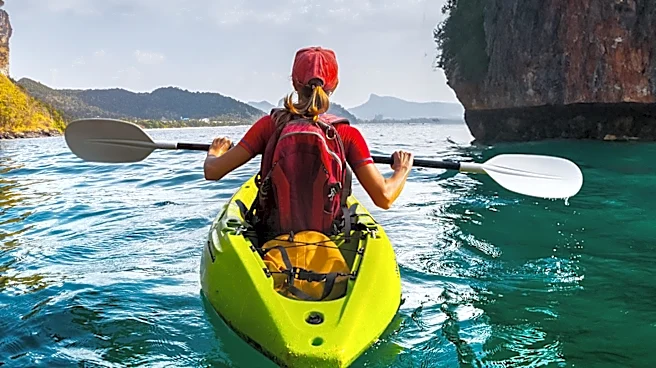
responses from 167 industry professionals, reveals that adventure and outdoor activities now lead the list of requested activities at 63%, followed by fishing and hunting at 53%. Golf, while still strong, ranks third at 50%. Notably, casino and nightlife experiences have fallen to near the bottom of the list, requested by only 6% of respondents. This shift is attributed to several external trends, including a record number of Americans engaging in outdoor recreation (183.2 million in 2025), a decline in alcohol consumption among U.S. adults, and the continued growth of golf travel, which has seen a 49% increase in participants since before the pandemic. Despite these clear trends, only 6% of destination marketing organizations have a dedicated strategy for guys' trips.
Why It's Important?
This shift in men's group travel trends is important for the U.S. tourism industry as it highlights evolving consumer preferences and untapped market potential. The decline in interest for casino and nightlife, coupled with the surge in outdoor and adventure activities, suggests that destinations need to re-evaluate their marketing strategies to align with these new demands. For regions rich in natural landscapes and outdoor opportunities, such as the Midwest and Great Lakes, this presents a significant opportunity to attract more male group travelers. The report also underscores a gap in current marketing efforts, with only a small percentage of destination marketing organizations having dedicated strategies for guys' trips. This indicates that early movers who adapt their offerings and marketing to these trends can gain a competitive advantage. Furthermore, the rise of multi-generational trips, including father-son excursions, suggests a broader appeal for experiences that foster connection and shared memories, moving beyond traditional 'party' trip stereotypes.
What's Next?
In response to these findings, tourism boards and travel companies are likely to develop more targeted marketing campaigns and product offerings that emphasize adventure, outdoor recreation, and fishing/hunting experiences. Destinations like Shores & Islands Ohio are already leveraging their natural assets to attract this demographic, and more regions are expected to follow suit. There is also an opportunity for the industry to explore wellness experiences tailored to men, as this area is currently underserved. The report suggests that future research will delve deeper into specific categories like fishing, hunting, golf, and father-son trips, providing more granular insights for the industry. As the market continues to evolve, destinations that proactively create dedicated strategies and packages for men's group travel, focusing on authentic experiences and outdoor activities, will be better positioned to capture this growing segment.
Beyond the Headlines
The evolving landscape of men's group travel reflects broader cultural and societal changes in the U.S. The move away from traditional nightlife and casino-centric trips towards outdoor and adventure activities suggests a growing desire for healthier, more active, and meaningful experiences. This could be linked to increased health consciousness, a desire to disconnect from digital life, and a renewed appreciation for nature. The rise of multi-generational trips also points to a strengthening of family bonds and a desire for shared experiences across different age groups. This trend challenges outdated stereotypes of male leisure travel and opens up new avenues for destinations to promote diverse and enriching experiences. Ethically, it encourages a more sustainable form of tourism that leverages natural resources responsibly and supports local economies through authentic engagement rather than purely entertainment-driven consumption. This shift could ultimately lead to a more diverse and resilient tourism industry that caters to a wider range of interests and values.