






What's Happening?
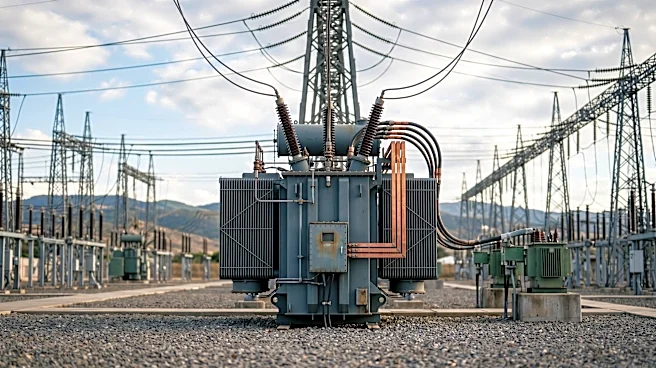
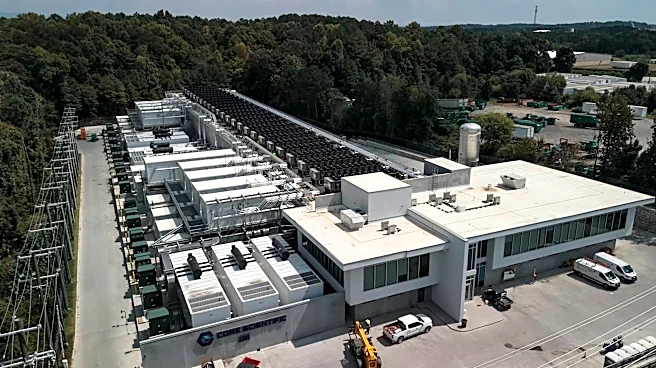
The rapid expansion of Artificial Intelligence (AI) infrastructure is leading to a 'grid-to-chip' energy strategy, which focuses on managing power delivery from utility grids down to individual processors in AI data centers. Delta Electronics, a major
power and thermal management manufacturer, is championing this approach, aiming to manage the entire energy delivery chain. This strategy is critical because AI data centers demand significantly more power than traditional computing infrastructure, putting pressure on energy supply and delivery systems, particularly in Asia. The 'grid-to-chip' framing emphasizes that energy efficiency is being engineered into AI infrastructure from the ground up, rather than being an afterthought. This shift means that the systems required to reliably and efficiently move power are becoming more sophisticated and strategically important, impacting supply chain energy costs and sustainability goals.
Why It's Important?
The 'grid-to-chip' energy strategy has profound implications for U.S. supply chains and businesses adopting AI. As AI-powered tools become more prevalent in demand forecasting, routing optimization, and warehouse automation, the indirect energy consumption of these systems increases. This rise in energy usage directly affects operational costs and an organization's Scope 3 emissions, which are indirect emissions from activities not owned or controlled by the organization. For companies with sustainability commitments, the carbon intensity of their digital infrastructure will come under increasing scrutiny. Furthermore, the competition for grid capacity driven by AI data center demand can lead to energy cost volatility, which is eventually passed through to cloud providers and, consequently, to businesses. Supply chain leaders must factor these energy costs into their AI ROI calculations to ensure accurate financial and sustainability reporting.
What's Next?
Supply chain leaders are advised to take proactive steps to address the intersection of AI adoption and energy accountability. This includes asking technology vendors about data center energy sourcing, Power Usage Effectiveness (PUE) ratings, and renewable energy commitments. Organizations should also map their digital energy footprint to understand the percentage of Scope 2 and Scope 3 emissions from cloud computing and AI platform usage. Building energy efficiency into AI ROI calculations will provide a more precise picture of the full cost of AI implementation. Additionally, applying 'grid-to-chip' thinking to physical facilities like distribution centers and manufacturing sites through energy audits can identify optimization opportunities. Engaging procurement in clean energy contracting, such as power purchase agreements, can help manage energy costs and support sustainability goals.
Beyond the Headlines
The 'grid-to-chip' strategy signals a deeper shift in how technology infrastructure is designed and managed, moving towards a holistic view of energy consumption. This development highlights the growing ethical and environmental responsibilities of the tech industry, particularly concerning its carbon footprint. The increased demand for energy-efficient solutions could spur innovation in power management technologies and renewable energy integration, potentially leading to a more sustainable digital economy. Moreover, the emphasis on transparency in energy sourcing for AI tools could empower consumers and businesses to make more informed choices, driving a market demand for greener AI solutions. This trend could also influence regulatory frameworks, pushing for stricter standards on energy efficiency and emissions reporting across the digital supply chain.