

What's Happening?
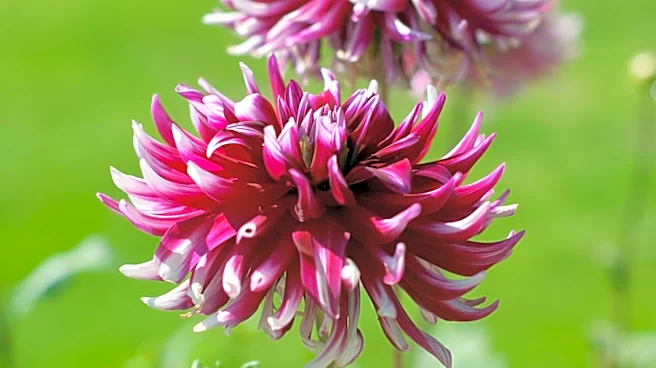
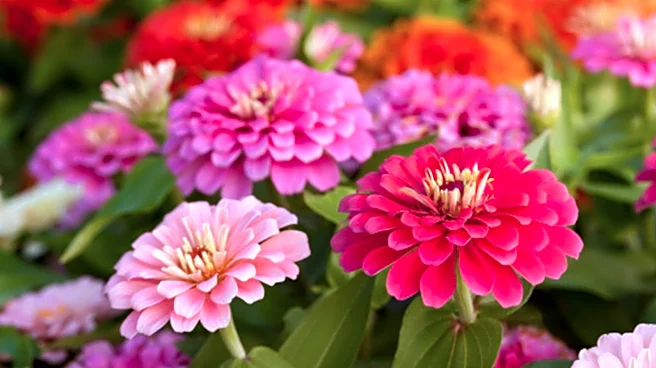
As August arrives, dahlias in U.S. gardens reach their peak, showcasing vibrant blooms. However, maintaining their beauty requires specific care due to challenges like high temperatures, drought, and humidity. Key maintenance tasks include regular deadheading
to prevent energy diversion to seed production, deep watering to strengthen root systems, and balanced fertilization to support continued flowering. Additionally, gardeners are advised to monitor for pests and diseases, ensure proper support for tall stems, and plan for tuber storage as the season progresses. These practices help sustain dahlia health and prolong their blooming period until the first fall frost.
Why It's Important?
Proper dahlia care in August is crucial for gardeners aiming to maximize the flowering period and maintain plant health. By implementing these care strategies, gardeners can enjoy prolonged blooms, enhancing the aesthetic appeal of their gardens. This not only contributes to personal satisfaction but also supports local biodiversity by providing habitats for pollinators. Moreover, understanding and applying these techniques can lead to more efficient water and resource use, aligning with sustainable gardening practices. The economic impact is also notable, as healthy dahlias can reduce the need for replacements and additional pest control measures.
What's Next?
Gardeners should continue to monitor weather conditions and adjust care routines accordingly. As the season progresses, planning for tuber storage becomes essential, especially in colder regions. This involves labeling plants for easy identification and preparing storage materials to protect tubers through winter. In warmer climates, gardeners may consider leaving tubers in the ground with appropriate mulching. These steps ensure that dahlias can be successfully replanted in the following season, maintaining garden continuity and reducing future costs.