






What's Happening?
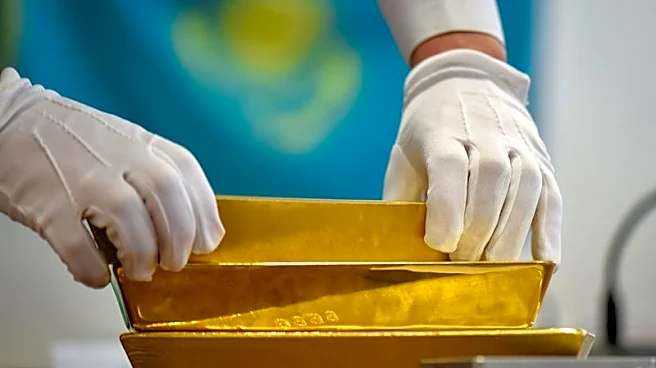
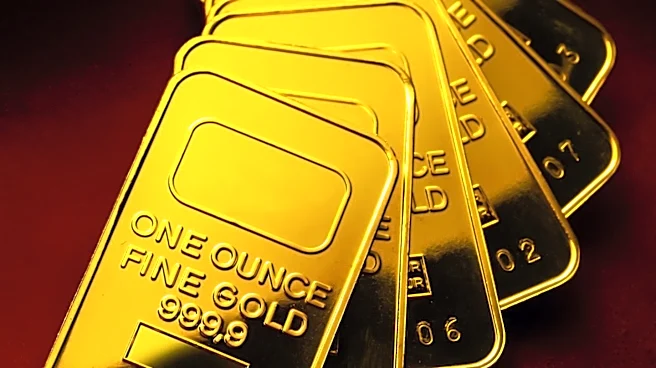
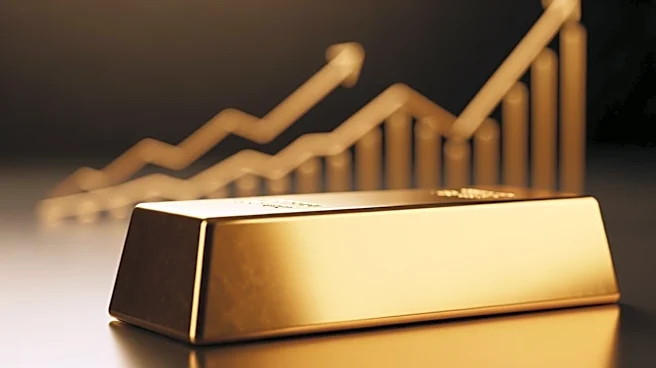
The gold market is currently stabilizing around the $4,000 per ounce mark following the release of new economic data from the U.S. Commerce Department. The data revealed that U.S. durable goods orders fell by 4.5% in May, aligning with economists' expectations.
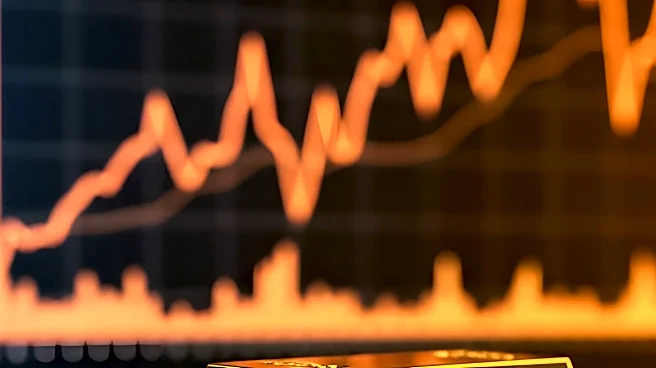
This decline follows a 7.9% increase in April. Despite the overall drop, core durable goods, which exclude the volatile transportation sector, rose by 1.3%, surpassing the forecasted 0.6% increase. Additionally, non-defense capital goods orders, excluding aircraft, increased by 1.6%, which was also above the expected 0.6% rise. These figures have contributed to the gold market's current stability, with spot gold trading at $4,001.70 per ounce, marking a slight gain of 0.06% for the session.
Why It's Important?
The stabilization of gold prices at the $4,000 level is significant as it reflects investor sentiment in response to economic indicators. Gold is often seen as a safe-haven asset, and its price movements can indicate broader economic trends. The decline in durable goods orders suggests potential slowdowns in manufacturing and consumer spending, which could impact economic growth. However, the rise in core durable goods and non-defense capital goods orders indicates resilience in certain sectors. These mixed signals may influence investor strategies, with some seeking refuge in gold amid economic uncertainty. The data's impact on gold prices also highlights the interconnectedness of economic indicators and commodity markets.
What's Next?
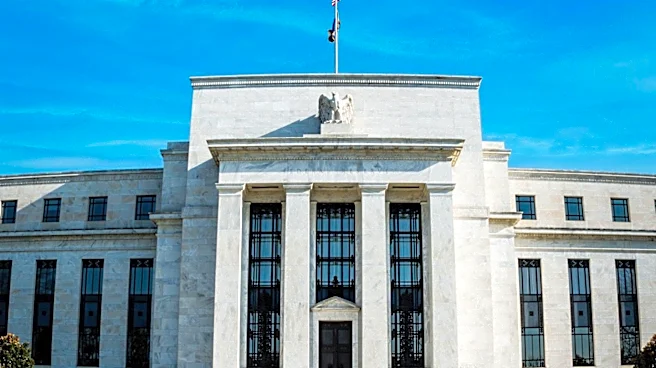
Future movements in gold prices will likely depend on upcoming economic data releases and their implications for the U.S. economy. Investors will be closely monitoring indicators such as employment figures, inflation rates, and consumer spending to gauge economic health. Any significant changes in these areas could prompt shifts in gold prices as investors adjust their portfolios. Additionally, central bank policies, particularly those related to interest rates, will play a crucial role in shaping market dynamics. As the Federal Reserve and other central banks respond to economic conditions, their actions could influence investor confidence and commodity markets, including gold.