






What's Happening?
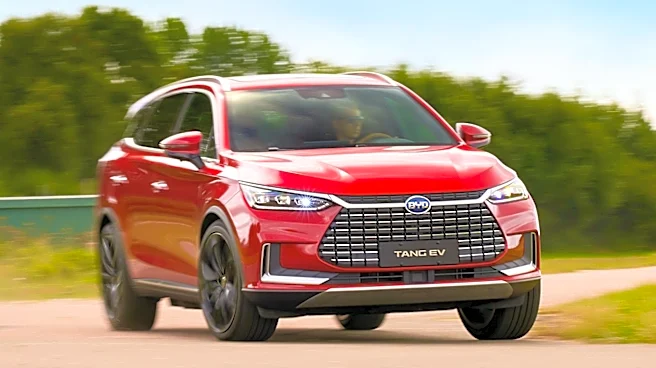
Ford CEO Jim Farley announced during the company's third-quarter earnings call that its new Universal Electric Vehicle (UEV) platform boasts motors, gearboxes, and inverters that are approximately 30% more efficient than those used by BYD. This efficiency
gain, according to Farley, will enable Ford to utilize smaller and cheaper batteries while still achieving its target range for the new platform. The first model based on this UEV platform, the Fathom, a midsize electric pickup, is slated for launch in the fourth quarter of 2027 with a starting price of $28,350. Ford designed the UEV platform with cost competitiveness in mind, aiming to rival Chinese automakers by incorporating in-house developed electronics, fewer parts, lower labor content, and LFP battery cells from its Marshall, Michigan plant. However, Ford has not yet provided specific test data, named the BYD model used for comparison, or detailed its measurement methodology.
Why It's Important?
This claim by Ford's CEO is significant for the U.S. automotive industry and the broader electric vehicle market. If proven true, Ford's UEV platform could drastically reduce the cost of EV production, making electric vehicles more accessible and competitive against established players and emerging Chinese manufacturers like BYD. The battery is the most expensive component of an EV, so a 30% improvement in drivetrain efficiency directly translates to the ability to use smaller, less costly batteries without sacrificing range. This could accelerate EV adoption in the U.S. by lowering purchase prices, a key barrier for many consumers. It also signals a strategic shift for Ford, moving away from adapting existing designs to creating cost-optimized EV architectures from the ground up, which could set a new benchmark for efficiency and affordability in the American EV market.
What's Next?
The immediate next step will be for Ford to provide more concrete data and independent verification to substantiate its efficiency claims. The launch of the Ford Fathom in Q4 2027 will be a critical moment, as its real-world performance, battery size, and actual range will either validate or challenge Farley's statements. Industry analysts and competitors will closely scrutinize the Fathom's specifications and pricing upon its release. If the Fathom delivers on its promise of a useful range from a modest battery at its stated price point, it could force other automakers to re-evaluate their EV development strategies, potentially leading to a new wave of cost-efficient electric vehicles entering the U.S. market. Ford's ability to scale this technology across its EV lineup will also be a key factor in its long-term impact.
Beyond the Headlines
Beyond the immediate economic implications, Ford's aggressive pursuit of efficiency and cost reduction in its EV platform highlights a deeper trend in the global automotive industry: the intense competition to make electric vehicles truly mainstream. This move by Ford reflects a recognition that technological innovation alone is not enough; affordability is paramount for mass adoption. The emphasis on in-house development and localized battery production (Michigan plant) also underscores a broader push for supply chain resilience and domestic manufacturing in the U.S. The 'efficiency war' among EV manufacturers could lead to rapid advancements in battery technology and drivetrain optimization, ultimately benefiting consumers with more affordable and capable electric vehicles. This strategic direction could also influence U.S. policy discussions around EV incentives, manufacturing, and energy independence.