





What's Happening?
Local entrepreneur Henry Coaxum has launched Nola Bank in New Orleans, establishing the first new bank chartered in Louisiana in 16 years. This opening occurs amidst a significant trend of mergers and acquisitions within the banking industry, which has led
to a market dominated by national and larger regional banks. Coaxum, who previously built a career running McDonald’s franchisees, co-founded Nola Bank to address a perceived gap in community banking services, particularly for underserved communities. The bank, based at 1100 S. Carrollton Ave., has commenced operations with $29 million in assets, raised from its 12-member board and 66 other investors. Nola Bank is also seeking a minority depository institution designation, aiming to specifically serve minority communities, which would make it the second bank in Louisiana with such a designation. Joe Omner serves as the bank's first president and CEO, with Chris Shah as senior executive vice president and chief banking officer.
Why It's Important?
The establishment of Nola Bank is significant as it counters a long-standing trend of consolidation in the U.S. banking sector, particularly in Louisiana. For 16 years, no new banks have been chartered in the state, indicating a market increasingly controlled by larger financial institutions. This consolidation often leads to a reduction in personalized services and can leave specific community needs, especially those of minority populations, underserved. Nola Bank's focus on targeting underserved communities and its pursuit of a minority depository institution designation directly addresses these gaps. By providing tailored financial services, Nola Bank aims to foster economic growth and financial inclusion within these communities, potentially offering more accessible credit and banking solutions than larger, more impersonal institutions. Its success could inspire similar community-focused banking initiatives in other regions experiencing the effects of widespread bank mergers, thereby promoting greater competition and diversity in the financial landscape.
What's Next?
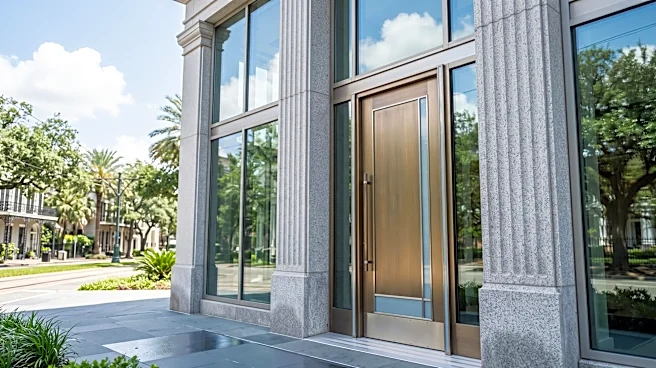
Nola Bank is currently operating out of a trailer on its property while developers complete construction and upgrades to its permanent building at 1100 S. Carrollton Ave., a former bank branch. The construction is expected to be finished by December. The bank's immediate focus is on reaching profitability, with an 'aggressive' three-year business plan in place, which is a faster timeline than typically seen for minority depository institutions. While the bank aims to remain nimble and invest in technology and its team, its initial strategy does not prioritize extensive branch expansion. Instead, Nola Bank plans to grow its deposit base by deliberately targeting underserved communities. If successful in its mission in New Orleans, co-founder Henry Coaxum has expressed hope that the model could be replicated elsewhere, suggesting potential future expansion beyond the local market once initial goals are achieved.
Beyond the Headlines
The launch of Nola Bank highlights a broader discussion about the role of community banks in a financial ecosystem increasingly dominated by large national and regional players. The trend of bank consolidation often raises concerns about reduced local investment, less personalized customer service, and a potential widening of the financial inclusion gap for marginalized communities. Nola Bank's emergence challenges this narrative by demonstrating a commitment to localized banking and targeted community support. Its pursuit of a minority depository institution designation underscores the ethical imperative to address historical inequities in financial access. This development could also spark renewed interest in regulatory frameworks that support the creation and sustainability of community banks, recognizing their unique value in fostering local economic resilience and social equity. The success or challenges faced by Nola Bank will offer valuable insights into the viability of community-focused banking models in the current economic climate.