








What's Happening?
The Open Wing Alliance (OWA), an international coalition of 84 animal protection organizations, is pressuring CJ Group, a prominent South Korean food and retail enterprise, to implement a global cage-free policy. This initiative comes as the South Korean government
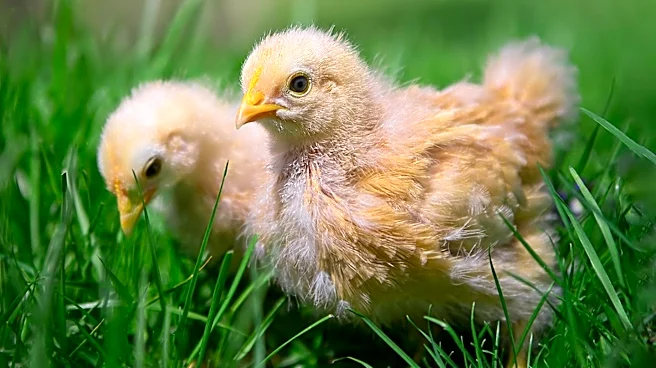
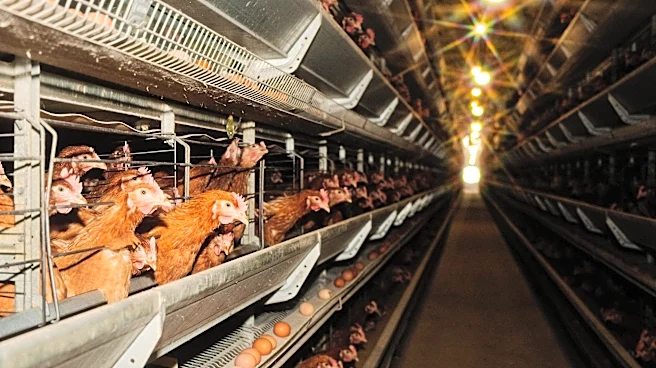
plans to ban battery cage breeding methods for laying hens by 2027 through revisions to the Enforcement Decree of the Livestock Industry Act. Battery cages, which confine chickens in extremely narrow spaces, have been identified as a major contributor to animal abuse and the spread of infectious diseases like avian influenza. The OWA's campaign highlights the increasing global demand for sustainable food practices and improved animal welfare standards. An industry source noted that the impending regulation places a significant burden on farms due to facility replacement costs and rising prime costs, emphasizing the need for major corporations like CJ Group to provide clear transition roadmaps, including demand forecasts and long-term purchase contracts, to support farms in their facility investments.
Why It's Important?
This development underscores a growing global trend towards enhanced animal welfare standards within the food industry, impacting both corporate sustainability and consumer expectations. For U.S. businesses operating internationally or sourcing from global suppliers, this movement signals a need to adapt to evolving ethical and regulatory landscapes. The push for cage-free policies reflects a broader societal shift where consumers are increasingly scrutinizing the origins and production methods of their food, influencing purchasing decisions and brand loyalty. Companies that fail to align with these sustainability and animal welfare standards risk reputational damage and potential market access issues in regions with stricter regulations. Furthermore, the economic implications for agricultural producers, particularly the costs associated with transitioning from conventional to cage-free systems, highlight the financial challenges and opportunities within the supply chain. This shift could also drive innovation in farming practices and technology to meet new welfare and environmental benchmarks.
What's Next?
CJ Group is expected to face continued pressure from the Open Wing Alliance and other animal welfare advocates to publicly commit to a global cage-free policy. The South Korean government's ban on battery cages by 2027 will necessitate significant changes within the domestic poultry industry, requiring farms to invest in new facilities and adapt their operations. Major corporations, including CJ Group, will likely need to develop and communicate clear cage-free transition roadmaps to support their suppliers and ensure a smooth shift in production. This could involve offering financial incentives, long-term contracts, or technical assistance to farms. The success of these transitions will depend on collaboration between corporations, agricultural producers, and government bodies to mitigate economic burdens and ensure compliance. The broader food industry, both in South Korea and globally, will be watching these developments closely as they could set precedents for future animal welfare regulations and corporate responsibility standards.
Beyond the Headlines
The movement towards cage-free farming extends beyond animal welfare, touching upon broader ethical, public health, and environmental considerations. The link between battery cages and the spread of infectious diseases like avian influenza highlights the public health risks associated with intensive animal confinement, suggesting that improved animal welfare can also contribute to disease prevention. Environmentally, the impact of large-scale animal operations, regardless of cage status, remains a significant concern, prompting discussions about sustainable agricultural practices. The debate also raises questions about corporate social responsibility and the role of major food companies in driving ethical supply chains. As consumer awareness grows, the demand for transparency and accountability in food production will likely intensify, pushing companies to integrate ESG (Environmental, Social, and Governance) principles more deeply into their business strategies. This shift could lead to a re-evaluation of industrial farming models and a greater emphasis on holistic approaches to food production that balance efficiency with ethical and environmental stewardship.