








What's Happening?
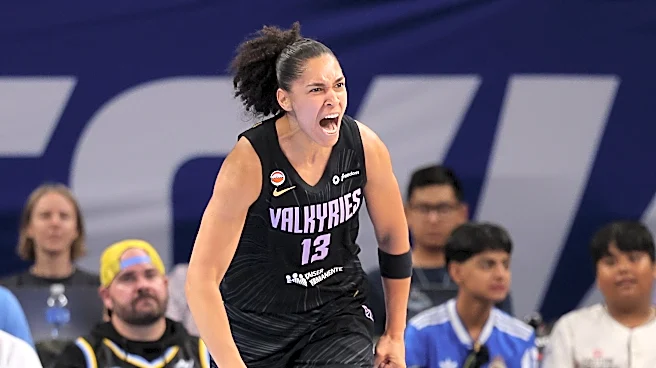
Sports analyst Jason Whitlock has publicly supported Sophie Cunningham's campaign for Kelsey Mitchell to be named the WNBA MVP, arguing against Caitlin Clark's candidacy. In a video posted on X, Whitlock stated that Clark's performance significantly declines
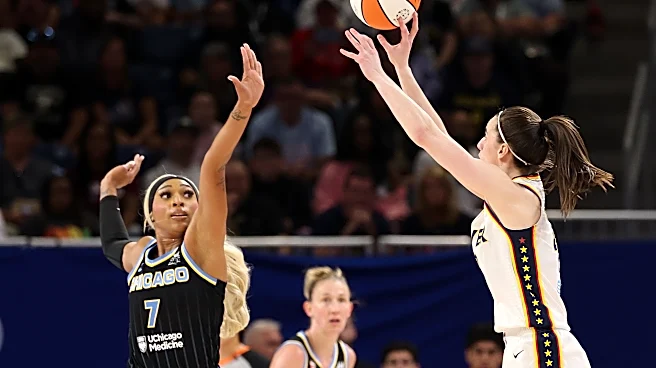
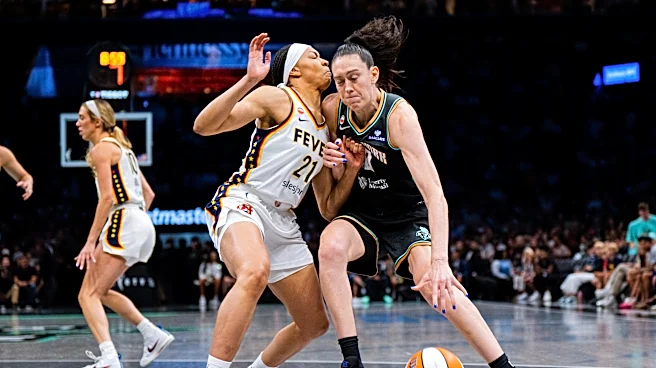
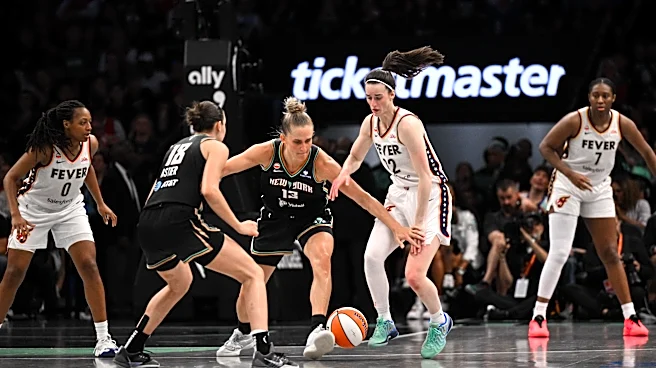
when playing against stronger teams, while Mitchell consistently performs well regardless of the opponent. He highlighted that Mitchell averages 25 points against top teams like Las Vegas and New York, whereas Clark's statistics "crater the moment real defense steps on the floor." Whitlock further suggested that Clark tends to excel against weaker teams, referring to it as "feasting on the soft," in contrast to Mitchell's ability to carry the load in "hard games." This discussion was initiated by Cunningham's comments to NBC sideline reporter Ashley ShahAhmadi, where she endorsed Mitchell for MVP. Whitlock emphasized Cunningham's unique perspective, given her experience playing alongside both Clark and Mitchell, as a credible basis for her judgment. He concluded his argument by contrasting Clark's recent 37-point, 10-assist performance against the 10th-place Chicago Sky with her less impactful outings against playoff-bound teams like the Liberty and Wings.
Why It's Important?
This debate over the WNBA MVP award, fueled by prominent sports analysts like Jason Whitlock, highlights significant discussions within professional women's basketball regarding player evaluation, competitive dynamics, and media narratives. The differing assessments of Caitlin Clark and Kelsey Mitchell's performances underscore a broader conversation about what constitutes true value in a player—consistency against all opponents versus standout performances that might be skewed by opponent strength. This discourse can influence public perception of players, impact endorsement opportunities, and shape future league marketing strategies. For the WNBA, the MVP debate, especially involving a high-profile rookie like Clark, draws increased attention to the league, potentially boosting viewership and engagement. However, it also exposes underlying tensions and differing philosophies on how players should be judged, which could affect team strategies and player development. The emphasis on strength of schedule and performance under pressure is crucial for defining elite status in professional sports, making this a key discussion point for the league's competitive integrity and player recognition.
What's Next?
As the WNBA playoffs approach, Caitlin Clark will have a critical opportunity to address criticisms regarding her performance against stronger teams. Her ability to deliver peak performances in high-stakes playoff games could either validate or refute the arguments made by analysts like Jason Whitlock. If the Indiana Fever, Clark's team, advances deep into the playoffs and Clark performs consistently against top contenders, it could significantly alter the narrative surrounding her MVP potential and overall impact. Conversely, if her performance continues to be inconsistent against elite competition, it might reinforce the current criticisms. The playoff matchups will be particularly challenging, with potential first-round encounters against experienced teams like the Liberty or formidable opponents such as the Dream or the defending champion Aces. The outcome of these games and Clark's individual contributions will be closely scrutinized, influencing future discussions about her standing in the league and the criteria for MVP consideration. The ongoing debate is likely to intensify as the postseason progresses, with analysts and fans closely watching how both Clark and Mitchell perform.
Beyond the Headlines
Beyond the immediate MVP debate, the discussion surrounding Caitlin Clark and Kelsey Mitchell touches upon deeper issues within professional sports, particularly the WNBA. The scrutiny of Clark's performance against varying levels of competition reflects a common challenge for highly touted rookies: adapting to the consistent rigor of professional play. This also highlights the subjective nature of MVP awards, where narratives, media attention, and statistical performance against different opponents can all play a role. Furthermore, the conversation implicitly raises questions about the league's competitive balance and the perceived disparity between top-tier and lower-tier teams. The emphasis on a player's ability to perform in "hard games" versus "feasting on the soft" speaks to the fundamental expectations placed on elite athletes to elevate their game when it matters most. This ongoing dialogue contributes to the evolving understanding of player value and the criteria for greatness in professional basketball, influencing how future generations of players are evaluated and how the league markets its stars.