







What's Happening?
The interior design landscape for 2026 is seeing a significant shift towards bold-hued lamps, moving away from the prevalence of neutral palettes. This trend, highlighted at Maison & Objet in Paris in January 2026, indicates that color is reclaiming its
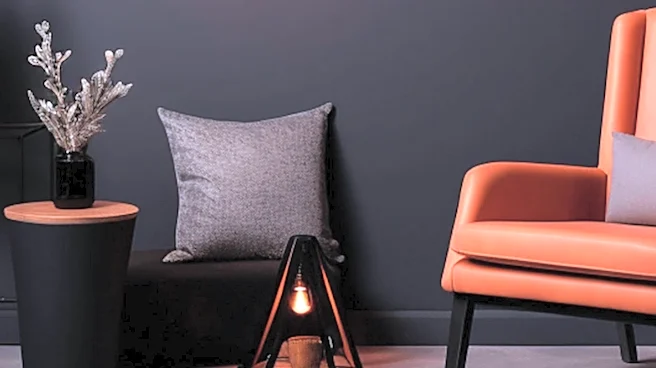
role in lighting design, not merely as an accent but as a primary design choice. Companies like Brightech are observing this change in consumer preferences, with red, teal, and green finishes becoming central design elements in their table lamps. This movement is driven by a desire for 'dopamine decor,' where objects evoke a real emotional response. Unlike other colored objects, lamps emit light, allowing their color to radiate and create an atmospheric experience, making them a unique and powerful tool for mood alteration in any interior space. The specific colors defining this trend for 2026 include deeper, earthier reds, versatile teals, organic greens, and intentional creams or off-whites that act as conductors for bolder hues.
Why It's Important?
This shift in interior design trends reflects a broader cultural movement towards personalization and emotional connection within living spaces. For the U.S. home furnishings and decor industry, this signals a significant market opportunity for manufacturers and retailers to innovate and expand their product lines to meet the demand for colorful, statement lighting. Designers and consumers alike are seeking ways to inject personality and mood into their homes, moving beyond the minimalist, all-beige aesthetic that has dominated for years. This trend could lead to increased sales in the lighting sector and related industries, such as paint and furniture, as consumers look to integrate these bold lighting choices into cohesive design schemes. It also emphasizes the growing importance of emotional well-being and self-expression in home environments, suggesting a long-term impact on how Americans approach interior design.
What's Next?
In response to this emerging trend, lighting manufacturers and interior designers are expected to further integrate bold colors into their collections and projects. Consumers can anticipate a wider array of colorful lamp options in various styles, from table and floor lamps to portable designs. Retailers will likely adjust their inventory to feature these vibrant pieces prominently, potentially offering curated collections that demonstrate how to incorporate bold lighting into different room aesthetics. Design publications and influencers will continue to showcase and promote 'dopamine decor' and the use of color in lighting, further solidifying its place in contemporary interior design. We may also see an increase in collaborations between lighting brands and color experts to develop new and unique hues that resonate with consumer desires for emotional and expressive home environments.
Beyond the Headlines
The embrace of bold-hued lamps goes beyond mere aesthetics; it signifies a deeper psychological shift in how people interact with their living spaces. The concept of 'dopamine decor' highlights a growing desire for environments that actively contribute to emotional well-being and personal expression, moving away from purely functional or aesthetically neutral spaces. This trend suggests a re-evaluation of the home as a sanctuary for individual identity and emotional comfort. Ethically, it encourages conscious consumption, as consumers are prompted to choose pieces that evoke genuine feeling rather than simply following fleeting trends. Culturally, it reflects a broader societal move towards embracing individuality and breaking free from conventional norms, extending even to the most intimate spaces of our lives. This could lead to more dynamic and personalized home interiors, fostering creativity and emotional resonance in everyday living.