
What's Happening?
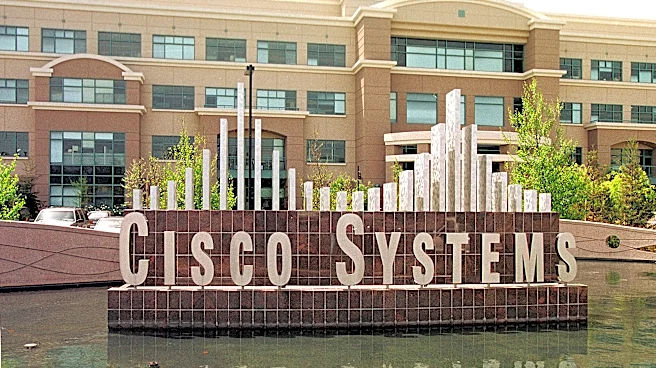
Cisco Systems, Inc. (NASDAQ:CSCO) announced a record fiscal fourth-quarter revenue of $17.3 billion, marking an 18% increase. Despite this revenue growth, the company's shares experienced a slight dip.
This decline is attributed to a 210 basis point reduction in gross margin, primarily due to a higher hardware mix in sales and an increase in memory costs. As of November 19th, 2026, Cisco Systems' stock closed at approximately $94.70 per share, with a market capitalization of about $372.64 billion. The company, a global technology leader, specializes in networking equipment, cybersecurity products, collaboration tools, and enterprise IT infrastructure. This information was highlighted in the third-quarter 2026 investor letter from FPA Queens Road Value Fund.
Why It's Important?
The performance of a major technology company like Cisco Systems has significant implications for the U.S. business sector and the broader economy. While record revenue indicates strong demand for its products and services, the shrinking gross margin points to underlying cost pressures that could affect profitability. A higher hardware mix suggests increased sales of physical components, which often carry lower margins compared to software or services. Rising memory costs, a common challenge in the tech industry, directly impact production expenses. This scenario highlights the delicate balance technology companies must maintain between revenue growth and cost management, especially in a competitive market. Investors and stakeholders will be closely watching how Cisco addresses these margin pressures to sustain long-term financial health.
What's Next?
Cisco Systems will likely focus on strategies to mitigate the impact of rising memory costs and optimize its product mix to improve gross margins. This could involve negotiating better deals with suppliers, exploring alternative component sources, or emphasizing higher-margin software and service offerings. The company's ability to adapt to these cost pressures will be crucial for its stock performance and investor confidence. Furthermore, the broader technology sector will be observing Cisco's approach, as similar challenges could affect other hardware-intensive tech firms. Future investor letters and earnings reports will provide more insight into the company's progress in addressing these financial dynamics and its outlook for the coming quarters.
Beyond the Headlines
The situation at Cisco Systems reflects a broader trend within the technology industry where supply chain dynamics and component costs can significantly influence financial performance, even for market leaders. The increased reliance on hardware, while driving revenue, can expose companies to greater volatility in raw material prices. This underscores the strategic importance of diversified product portfolios and robust supply chain management in the tech sector. It also highlights the ongoing challenge for technology companies to innovate and maintain competitive pricing while navigating fluctuating input costs. The long-term implications could include a shift towards more vertically integrated supply chains or increased investment in proprietary component development to gain better control over costs and margins.