





What's Happening?
A federal judge in Illinois has denied a motion by an industry group and several businesses to temporarily block the state's new law restricting sales of intoxicating hemp products. U.S. District Judge Martha Pacold's ruling means that businesses that sued
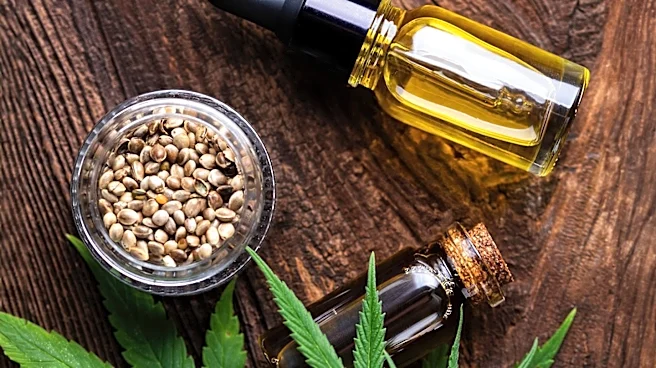
must now cease selling hemp-derived THC drinks, gummies, and other intoxicating products, aligning them with other retailers across Illinois who have been subject to the ban since November 12. The Illinois Healthy Alternatives Association, representing over 250 businesses, had sought the temporary restraining order, arguing that the state's restrictions conflict with federal law regarding interstate commerce. Assistant Attorney General Richard Huszagh contended that the state has the authority to regulate these products for public health reasons, noting that Illinois' cannabis law only permits such sales through licensed dispensaries. The lawsuit challenging the legality of the law will continue, with the next court date set for December 15.
Why It's Important?
This ruling significantly impacts the burgeoning hemp-derived THC market in Illinois, effectively shutting down a segment of businesses that have operated under what officials described as a 'loophole' in cannabis regulations. For consumers, it means a loss of access to products previously available in convenience stores and vape shops. For the state, it represents a step towards consolidating the sale of intoxicating cannabis products within the regulated, licensed dispensary system, potentially increasing revenue from existing cannabis taxes and enhancing public health oversight. The legal battle also highlights the ongoing tension between state and federal regulations concerning hemp and cannabis, as the 2018 federal Farm Bill legalized hemp but led to the proliferation of intoxicating derivatives. This decision could set a precedent for other states grappling with similar regulatory challenges in the rapidly evolving cannabis and hemp industries.
What's Next?
The lawsuit challenging the Illinois law will proceed, with the next court hearing scheduled for December 15. The Illinois Healthy Alternatives Association plans to explore options for appellate court review. This date is critical as it falls after December 11, when most new federal restrictions on intoxicating hemp are slated to take effect unless Congress intervenes. The outcome of the ongoing lawsuit could further define the regulatory landscape for hemp-derived products in Illinois and potentially influence federal legislative actions. Meanwhile, hemp businesses affected by the ban will either need to cease sales of these products or pursue cannabis licenses, which are subject to strict state regulations. Advocates for the hemp industry are also pushing for a reversal of the federal-level ban, indicating continued legislative and legal efforts at both state and national levels.
Beyond the Headlines
The legal and regulatory skirmishes over intoxicating hemp products reveal a deeper struggle between emerging industries, established regulatory frameworks, and public health concerns. The rapid innovation in hemp processing, which allowed for the creation of intoxicating derivatives like delta-8-THC from legally defined hemp, exposed gaps in existing laws. This situation underscores the challenge for lawmakers to keep pace with scientific and market developments, often leading to reactive legislation. The debate also touches on economic fairness, as licensed cannabis businesses have lobbied against unregulated hemp product sales, citing unfair competition. Furthermore, concerns about product safety, packaging that mimics candy, and age restrictions highlight broader public health responsibilities. This case is a microcosm of the larger national debate on cannabis legalization and regulation, illustrating the complexities of integrating new psychoactive substances into existing legal and commercial structures while balancing economic opportunity with public welfare.