





What's Happening?
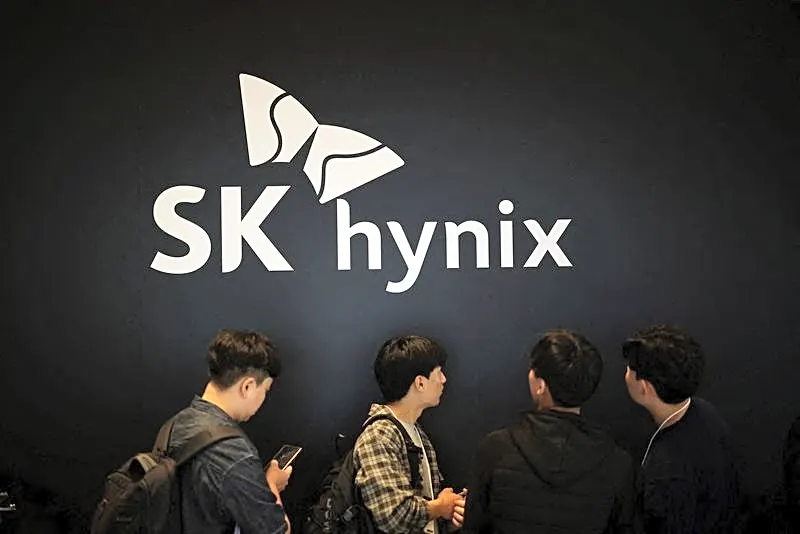
SK Hynix, a South Korean semiconductor manufacturer, has halted its review of a potential U.S. Initial Public Offering (IPO) and related pre-IPO fundraising for its memory-chip subsidiary, Solidigm. This decision, made on October 23, is attributed to challenging
capital-market conditions and follows opposition from shareholders and regulatory scrutiny concerning a separate subsidiary listing. Earlier reports had suggested Solidigm could achieve a valuation of up to $150 billion, though this was an indicative figure rather than a confirmed IPO price. Solidigm, formed after SK Hynix acquired Intel's NAND and SSD business in 2021, has been a key part of SK Hynix's strategy to capitalize on demand for enterprise solid-state drives (eSSDs) used in AI data centers. The company had reported significant revenue and net income growth in the first half of the year.
Why It's Important?
This suspension is significant for the U.S. semiconductor industry and broader capital markets. It reflects the current cautious environment for large-scale IPOs, particularly for companies in sectors experiencing market volatility. The decision by SK Hynix highlights how challenging market conditions, including a 'sharp correction in semiconductor stocks,' can deter even promising companies from going public. For U.S. investors, it means a delay in accessing a potentially high-growth opportunity in the memory-chip sector. Furthermore, the mention of 'shareholder opposition and regulatory scrutiny' underscores the increasing focus on corporate governance and the potential impact of subsidiary listings on existing shareholders, a trend that could influence future IPO structures in the U.S. and globally. The move also leaves Solidigm's long-term financing for expansion, including a potential U.S. fabrication plant, in question, impacting future supply chain dynamics.
What's Next?
SK Hynix will now explore alternative financing paths for Solidigm's growth, which could include internal cash generation, bank loans, corporate bonds, or strategic partnerships. The company has stated that expanding Solidigm's production capacity and strengthening its competitiveness remain priorities, suggesting that the underlying growth strategy is intact despite the IPO suspension. The timing and financing of major new investments, such as a potential U.S. fabrication plant, remain undecided. SK Hynix will likely re-evaluate market conditions and regulatory expectations before considering another attempt at a public listing for Solidigm. The decision also allows SK Hynix to preserve its current ownership exposure to Solidigm, avoiding potential dilution during an unfavorable market cycle.
Beyond the Headlines
The shelving of Solidigm's U.S. IPO by SK Hynix reveals deeper implications beyond immediate market conditions. It underscores the growing tension between a parent company's desire to unlock value through subsidiary listings and the concerns of existing shareholders regarding potential dilution and valuation impact. The 'dual-listing controversy' in Korea, where financial regulators have increased scrutiny of such offerings, highlights a global trend towards greater corporate governance and shareholder protection. This situation could lead to a re-evaluation of how large conglomerates structure their subsidiaries and approach public offerings, especially when multiple entities within the same corporate family are already publicly traded. It also emphasizes that while the demand for AI infrastructure drives the need for advanced memory chips, the financing mechanisms for such capital-intensive ventures are subject to complex market, regulatory, and shareholder dynamics, potentially slowing down critical investments in the semiconductor supply chain.