






What's Happening?
Rheinmetall AG, a German defense company, has received an order from Romania's Ministry of Defence for 66 Lynx combat vehicles, valued at approximately €738 million. This order is a call-off under a larger framework contract awarded in May 2026, which
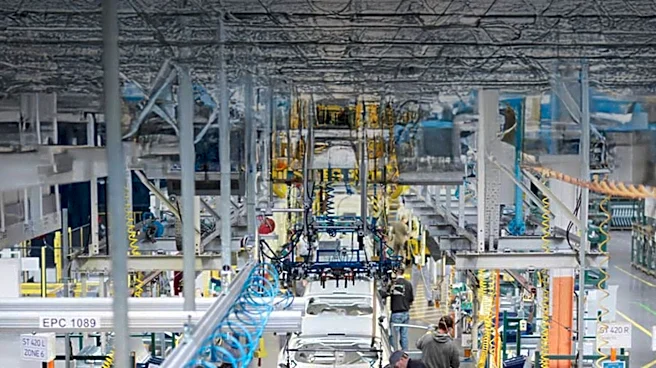
encompasses a total of 298 Lynx vehicles. Romania had previously ordered 232 vehicles when the framework contract was initially signed, and this latest order covers the remaining 66 units. The vehicles included in this order are infantry fighting vehicles, armored mortar carriers, command post vehicles, and medical evacuation vehicles. Deliveries are slated to commence in 2028 and conclude by 2030. This specific order is part of a broader €5.7 billion defense package Rheinmetall secured from Romania in May 2026 under the European Union's Security Action for Europe (SAFE) program, which also includes air defense systems, ammunition, and naval vessels. In response to these contracts, Rheinmetall announced plans to invest €700 million to expand its production capacity in Romania, involving over 200 subcontractors and aiming to create thousands of new jobs, alongside a transfer of technology.
Why It's Important?
This significant defense contract highlights the ongoing efforts by European Union member states, including Romania, to bolster their defense capabilities and modernize their military equipment. The investment by Rheinmetall in expanding production capacity within Romania signifies a strategic move to strengthen European defense industrial bases and reduce reliance on external supply chains. This expansion is expected to generate substantial economic benefits for Romania through job creation and increased industrial activity, fostering technological transfer and skill development within the country's defense sector. For Rheinmetall, securing such a large order reinforces its position as a key player in the global defense market and demonstrates the continued demand for advanced military hardware. The broader €5.7 billion package underscores a concerted effort within the EU to enhance collective security and defense readiness, potentially influencing future defense procurement trends across the continent.
What's Next?
Deliveries of the 66 Lynx combat vehicles are scheduled to begin in 2028 and are expected to be completed by 2030. Concurrently, Rheinmetall will proceed with its planned €700 million investment to expand production capacity in Romania. This expansion will involve engaging over 200 subcontractors and is projected to create thousands of new jobs, along with facilitating a transfer of technology. The successful execution of this contract and the expansion of production facilities could lead to further defense collaborations between Rheinmetall and other European nations seeking to upgrade their military assets. The ongoing implementation of the EU's Security Action for Europe (SAFE) program suggests that similar defense packages and investments may be anticipated across the region as member states continue to prioritize defense modernization and security.
Beyond the Headlines
The substantial investment by Rheinmetall in Romania, coupled with the transfer of technology, could have long-term implications for Romania's industrial capabilities and its role within the European defense ecosystem. This move could transform Romania into a more significant hub for defense manufacturing and innovation, potentially attracting further foreign direct investment in related sectors. The emphasis on local production and technology transfer aligns with broader European strategic autonomy goals, aiming to build a more resilient and self-sufficient defense industry within the EU. Furthermore, the creation of thousands of new jobs and the involvement of numerous subcontractors will likely have a ripple effect on Romania's economy, fostering growth in ancillary industries and enhancing the country's skilled labor force. This development also underscores the evolving geopolitical landscape, where defense spending and industrial capacity are becoming increasingly critical for national and regional security.