






What's Happening?
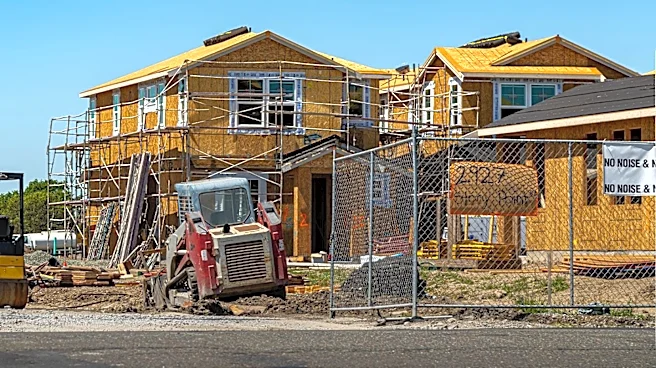
HayMax Capital has commenced construction on a 10-unit workforce housing development in Aspen, Colorado, located four blocks from Hyman Avenue shopping street and half a mile from Gondola Plaza. The project consists of two homes: a new build and a historic
1,300-square-foot Victorian home built in 1890, valued at approximately $10.5 million. This initiative aims to address the critical need for employee housing in Aspen, where home values are among the highest globally. The development is situated a block away from the MOLLIE Aspen, a boutique hotel also co-owned by Michael Brown of HayMax Capital, and is intended to house employees from such establishments. The project will deliver 10 individual units with a total of 23 bedrooms, including single, two, and three-bedroom configurations.
Why It's Important?
This development is crucial for Aspen's economy and social fabric, as the severe lack of affordable housing significantly impacts the local workforce. With over 60% of Pitkin County's 16,000 workers commuting from outside the county, often driving long distances through alpine terrain, the project aims to alleviate some of the housing pressure. By providing housing within walking distance of work and downtown Aspen, HayMax Capital seeks to foster an environment where employees can live, work, and integrate more fully into the community. The project also utilizes Aspen's affordable housing credits, encouraging private-sector solutions to a public housing crisis. This initiative could serve as a model for other high-cost resort towns struggling with similar workforce housing challenges.
What's Next?
The project is expected to proceed with construction, with units becoming available for MOLLIE Aspen staff. While the specific rental pricing details for employees are yet to be disclosed, they will be subject to deed-restricted limits set by the Aspen/Pitkin County Housing Authority (APCHA). The City of Aspen's Director of Community Development, Ben Anderson, confirmed the units are approved as affordable housing and will be deed-restricted. This development is a step towards addressing the broader housing shortage in the region, which a recent Regional Housing Needs Assessment identified as requiring 7,686 units over the next decade, with a current deficit of 3,490 units. Continued efforts from both private developers and public agencies will be necessary to meet the extensive demand for workforce housing in the area.
Beyond the Headlines
The HayMax Capital project highlights the complex interplay between luxury tourism, economic growth, and social equity in resort communities like Aspen. The astronomical property values, with a median single-family home reaching $17.5 million in 2025, create an unsustainable living situation for essential workers. This initiative, while a positive step, underscores the systemic challenges in creating truly affordable and accessible housing in such markets. It also raises questions about the long-term sustainability of communities that rely heavily on a service industry workforce that cannot afford to live where they work. The project's integration of a historic Victorian home into a modern workforce housing scheme also reflects efforts to balance preservation with contemporary needs, offering a potential blueprint for similar developments in other historic, high-cost areas.