


What's Happening?
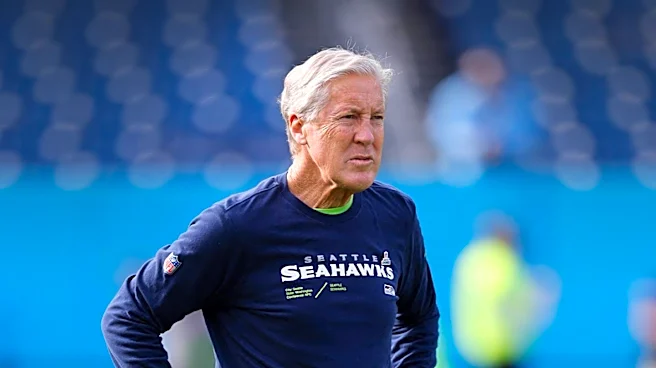
During the 2012 NFL Draft, Seattle Seahawks Head Coach Pete Carroll initially expressed skepticism about drafting quarterback Russell Wilson due to his height. Despite strong interest from General Manager John Schneider and Senior Personnel Executive
Scot McCloughan, Carroll repeatedly voiced concerns, stating, 'He’s short, he’s short.' This internal debate within the Seahawks' front office highlighted a prevailing NFL bias against undersized quarterbacks at the time. Schneider and McCloughan, however, were convinced of Wilson's potential, drawing comparisons to Drew Brees and emphasizing Wilson's exceptional performance at Wisconsin, where he quickly became a team captain. The team ultimately drafted Wilson in the third round, 75th overall, after a compelling interview at the Combine where Wilson's confidence and football intelligence won over Carroll. This decision was made despite external draft analysts widely dismissing Wilson's prospects as a starting NFL quarterback.
Why It's Important?
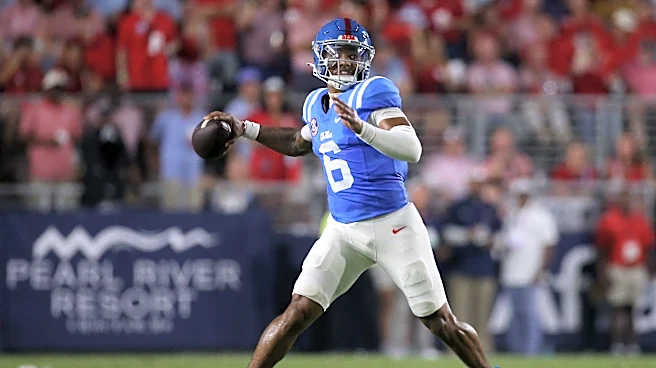
This internal struggle within the Seahawks' leadership underscores a significant shift in NFL scouting and player evaluation. The initial reluctance to draft Russell Wilson due to his height reflects a long-standing, traditional mindset in professional football that prioritized physical measurements over demonstrated skill, leadership, and football IQ. Wilson's subsequent success, including a Super Bowl championship, challenged these entrenched biases and paved the way for other 'undersized' quarterbacks like Baker Mayfield, Kyler Murray, and Bryce Young to be considered top draft picks. This event highlights how a team's willingness to deviate from conventional wisdom can lead to groundbreaking success and fundamentally alter perceptions within a sport. It also demonstrates the critical role of individual conviction, as Schneider and McCloughan's persistence ultimately convinced Carroll, leading to one of the most successful quarterback selections in recent NFL history.
What's Next?
The legacy of the Russell Wilson draft decision continues to influence NFL team building and scouting philosophies. Teams are now more open to evaluating quarterbacks based on their overall skill set, leadership qualities, and on-field production, rather than strictly adhering to traditional physical prototypes. This shift is likely to lead to more diverse talent entering the league, potentially increasing competition and innovation at the quarterback position. Future draft classes will likely see a continued emphasis on comprehensive player assessment, with less weight given to arbitrary physical measurements. The success of players like Wilson serves as a constant reminder that talent and leadership can transcend perceived physical limitations, encouraging teams to look beyond the obvious in their pursuit of championship-caliber players.
Beyond the Headlines
The story of Pete Carroll's initial hesitation and eventual acceptance of Russell Wilson extends beyond football, touching on broader themes of challenging conventional wisdom and overcoming prejudice. It illustrates how deeply ingrained biases, even in professional fields, can limit opportunities and obscure talent. Wilson's journey, from being dismissed by college coaches due to his size to becoming a Super Bowl-winning quarterback, serves as a powerful narrative about perseverance and self-belief. This case study offers valuable lessons for any organization about the importance of open-mindedness, the courage to defy norms, and the potential for transformative outcomes when diverse perspectives are embraced. It highlights that true potential often lies beyond superficial characteristics, requiring deeper insight and a willingness to take calculated risks.