






What's Happening?
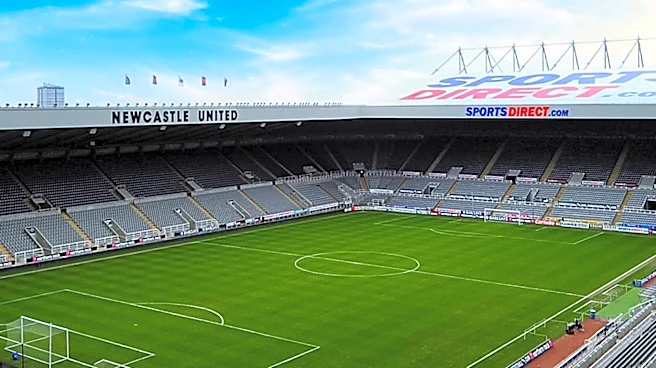
Newcastle United is currently evaluating two distinct options to address its stadium future, aiming to increase capacity and commercial revenue while maintaining the historical significance of St James' Park. According to The Times' Martin Hardy, the club
is considering either constructing a new 65,000-capacity stadium behind the Leazes End, estimated to cost approximately £1.5 billion, or redeveloping St James' Park for around £500 million. The new-build option would add roughly 12,000 seats to the current 52,700 capacity, with plans already drafted. However, financing for this option would require Newcastle's Public Investment Fund (PIF) ownership to fund about one-third of the cost, potentially necessitating the club to raise £400 million to £500 million from new investors, which could dilute the existing ownership stake. The alternative, redeveloping St James' Park, would increase capacity to approximately 60,000 at a significantly lower cost, roughly one-third of the new stadium project.
Why It's Important?
The decision regarding Newcastle United's stadium is crucial for its long-term financial stability and competitive aspirations. Increasing stadium capacity directly translates to higher matchday revenue, a vital component for clubs aiming to compete at the top levels of football. The choice between a new stadium and redeveloping St James' Park reflects a balance between maximizing revenue potential and preserving the club's heritage and fan base connection to its historic home. A larger capacity would allow the club to accommodate more fans, generate more ticket sales, and potentially attract more lucrative sponsorship deals. The financial implications are substantial, with the new stadium option requiring significant external investment and potential ownership dilution, which could impact the club's control and future strategic decisions. Conversely, a more cost-effective redevelopment could provide a capacity boost without the same financial strain, albeit with a smaller overall increase. This strategic infrastructure investment is fundamental to supporting Newcastle's broader ambitions on and off the pitch.
What's Next?
Newcastle United has not yet committed to either stadium option and will require external partners for design, construction, and financing, regardless of the chosen path. The club's ultimate decision will significantly shape its matchday experience and its ability to generate the additional revenue needed to support its wider ambitions. The process will likely involve detailed feasibility studies, financial modeling, and negotiations with potential investors and construction firms. Stakeholder engagement, particularly with fans who have a strong emotional attachment to St James' Park, will also be critical. The club will need to weigh the financial viability of each project against the potential returns and the impact on its identity. The outcome of this decision will determine the scale of future revenue growth and the club's capacity to invest further in its squad and facilities, influencing its competitive standing in the Premier League and European competitions for decades to come.
Beyond the Headlines
Beyond the immediate financial and capacity considerations, the stadium decision carries profound cultural and emotional weight for Newcastle United and its supporters. St James' Park is more than just a venue; it is a symbol of the city's identity and a spiritual home for generations of fans. Opting for a new stadium, while offering modern facilities and potentially higher revenue, risks alienating a portion of the fanbase who cherish the historical connection to St James' Park. Redevelopment, on the other hand, could preserve this heritage while still modernizing the facilities. The ethical dimension involves balancing commercial imperatives with community sentiment and tradition. The long-term shift could see Newcastle United either solidify its place as a modern footballing powerhouse with state-of-the-art infrastructure or reinforce its identity by evolving its historic home. This decision will also set a precedent for other clubs facing similar dilemmas, highlighting the tension between tradition and the demands of modern football economics.