



What's Happening?
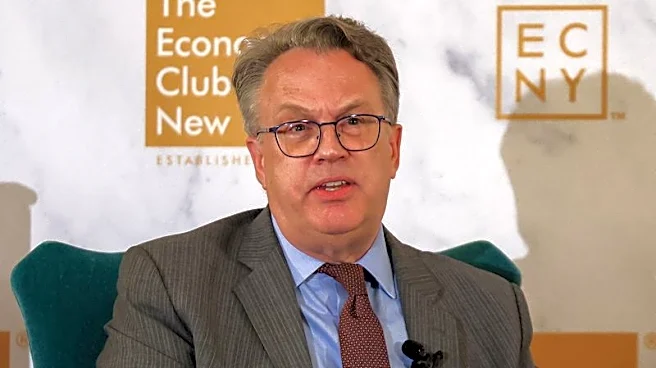
Dallas Fed President Lorie Logan has urged the Federal Reserve to strengthen its market-support tools for the U.S. Treasury market and bank funding backstops, emphasizing that these measures should not introduce additional economic stimulus. Speaking
at a Dallas Fed conference on bank funding, Logan, who previously served as the New York Fed's chief of open market operations, highlighted the importance of ensuring that any Fed intervention in the Treasury market does not conflict with monetary policy, especially in an environment where tighter policy is warranted. While the U.S. Treasury market is currently functioning effectively despite interest-rate volatility, and banks have improved their access to contingent funding, Logan believes it is prudent for the Federal Open Market Committee (FOMC) to enhance its operational readiness. She noted that historically, the Fed's market-functioning interventions often coincided with efforts to stimulate economic activity, allowing asset purchases to serve both purposes. However, in the current tightening cycle, using one tool for two goals could complicate the Fed's communications and hinder decisive action.
Why It's Important?
Logan's recommendations are significant because they address the delicate balance the Federal Reserve must maintain between ensuring financial market stability and implementing effective monetary policy. By advocating for stronger market-support tools without additional stimulus, she underscores the Fed's commitment to combating inflation through restrictive policies while preparing for potential liquidity stresses. This approach aims to prevent market dysfunction from escalating into broader economic instability, which could undermine the Fed's efforts to cool inflation. The U.S. Treasury market is a cornerstone of the global financial system, and its smooth functioning is critical for economic stability. Bolstering backstops for this market and bank funding can provide a safety net, reducing the risk of financial crises and ensuring that banks have adequate liquidity during periods of stress. This proactive stance is crucial for maintaining confidence in the financial system and preventing disruptions that could negatively impact businesses and consumers across the U.S.
What's Next?
While Logan does not currently see an immediate need for market intervention, her suggestions point towards potential future actions by the Federal Reserve to enhance its operational readiness. These recommendations include extending discount window operations to weekends and holidays, centrally clearing the Fed's repo operations to reduce balance sheet costs for intermediators, and preparing to lend to non-bank entities known as designated financial market utilities in severe liquidity distress scenarios. These measures aim to improve the efficiency and accessibility of the Fed's liquidity tools, ensuring they can be deployed effectively if market conditions deteriorate. The FOMC will likely consider these proposals as part of its ongoing assessment of financial stability and monetary policy implementation. The focus will be on how to implement these enhancements without inadvertently providing economic stimulus, thereby maintaining the integrity of the Fed's tightening policy.
Beyond the Headlines
The discussion around bolstering market-support tools without adding stimulus highlights a broader challenge for central banks: how to manage financial stability risks in an environment of restrictive monetary policy. This situation requires a nuanced approach, as traditional tools for market intervention often have stimulative effects. Logan's emphasis on clear communication and distinct tools for different objectives reflects a lesson learned from past interventions, where the dual-purpose use of asset purchases could muddy the Fed's message. The long-term implication is a potential shift in how the Fed approaches financial stability, moving towards more targeted and less stimulative interventions. This could lead to a more resilient financial system, better equipped to handle shocks without compromising the central bank's primary mandate of price stability. It also underscores the increasing complexity of central banking in a highly interconnected and volatile global economy.