



What's Happening?
Economist Daniel Lacalle, speaking on 'VOZ News,' highlighted the resilience of the U.S. economy, stating that the risk of a recession is very low. He noted that current growth estimates for the United States range between 2.5% and 2.7% real growth after
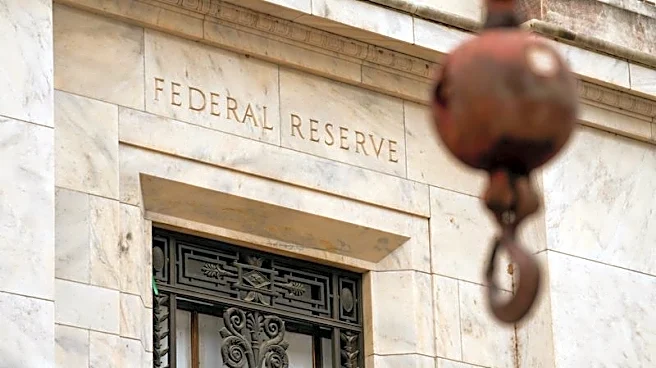
accounting for inflation. Lacalle emphasized that consumer spending, a primary driver of the U.S. economy, remains strong and has not been significantly weakened by current inflation levels. Second-quarter consumption figures have been revised upward, further supporting the view that the economy is capable of sustaining its expansion despite inflationary pressures. He also cautioned that while there is a risk of persistent inflation, further interest rate hikes by the Federal Reserve might not be the solution, as they could unnecessarily weaken an otherwise solid economy.
Why It's Important?
This assessment is important because it offers a counter-narrative to widespread concerns about an impending recession, particularly in the context of ongoing inflation and potential Federal Reserve interest rate adjustments. If Lacalle's analysis holds true, it suggests that U.S. households and businesses may experience continued economic stability and growth, rather than a downturn. The emphasis on strong consumer spending indicates a robust domestic demand, which is crucial for economic health. Furthermore, his caution against additional rate hikes highlights a debate within economic circles about the appropriate monetary policy response to inflation, suggesting that aggressive tightening could do more harm than good by stifling growth without effectively addressing external inflationary factors like energy prices. This perspective could influence policy discussions and market sentiment, potentially leading to more optimistic outlooks for economic performance.
What's Next?
The U.S. economy will continue to be closely monitored for signs of persistent inflation and the Federal Reserve's response. While Lacalle suggests a low risk of recession, the Fed's future decisions on interest rates will be critical. If the Fed opts for further rate hikes, it could test the economy's resilience, potentially impacting households and businesses as borrowing costs increase. Conversely, if the Fed pauses or signals a less aggressive stance, it might alleviate some pressure on economic sectors sensitive to interest rates. The trajectory of consumer spending and inflation figures in the coming quarters will provide further data points to validate or challenge the current optimistic outlook. The debate among economists regarding the effectiveness of rate hikes in addressing certain types of inflation is also likely to continue, influencing public and policy discussions.
Beyond the Headlines
The discussion around the U.S. economy's resilience and the efficacy of monetary policy extends beyond immediate financial indicators. It touches upon the broader societal impact of inflation and interest rate decisions. If inflation persists, it erodes purchasing power, disproportionately affecting lower-income households. However, if the economy remains strong, it can mitigate some of these effects through job growth and wage increases. The debate over interest rate hikes also highlights a fundamental tension in economic policy: balancing the need to control inflation with the desire to avoid an unnecessary recession. This involves complex considerations about the sources of inflation—whether demand-driven or supply-side—and the limitations of monetary tools in addressing the latter. The long-term implications for economic stability and social equity depend heavily on these policy choices and their underlying economic interpretations.