







What's Happening?
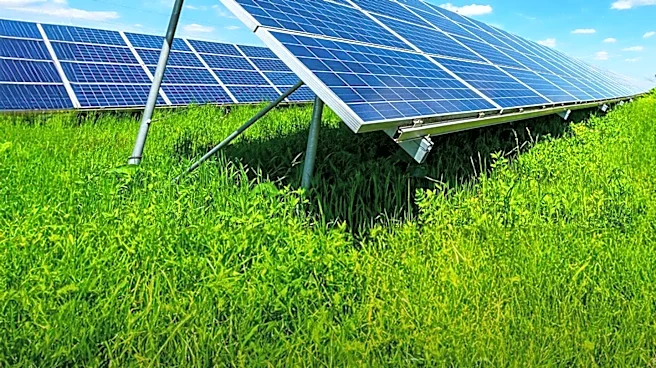
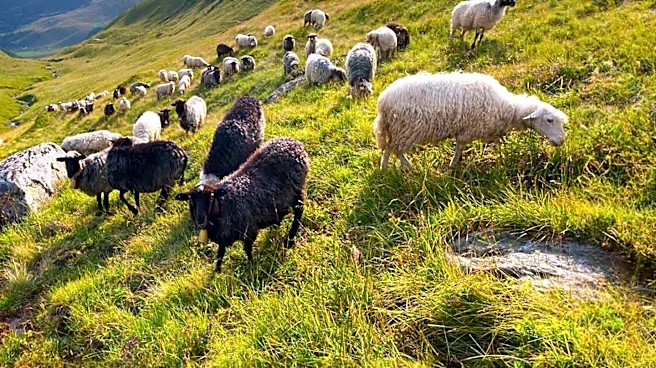
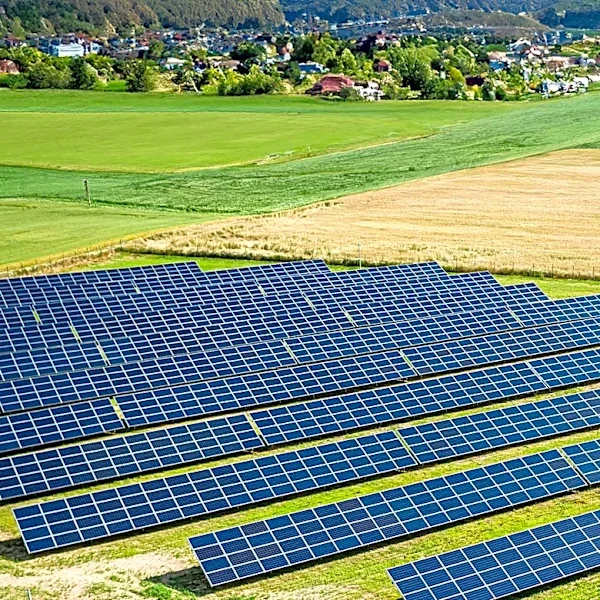
Julie Bishop, a New Jersey teacher, has developed an innovative business called Solar Sheep LLC, which uses sheep to manage vegetation at solar energy sites. Her journey began in 2013 when she observed workers mowing around solar panels and realized her sheep could
perform the task more efficiently and sustainably. Starting with 50 sheep grazing 15 acres, her flock expanded to 450 sheep managing 85 acres by 2021. Bishop's operation involves careful planning, including the use of portable fencing and strategic placement of water and mineral stations to guide the sheep. She primarily raises Katahdin sheep, with lambs sold for meat, pets, and to other solar grazers. Her success has led to involvement in planning a 700-acre utility-scale solar facility designed specifically for grazing, which will include infrastructure for year-round sheep residency.
Why It's Important?
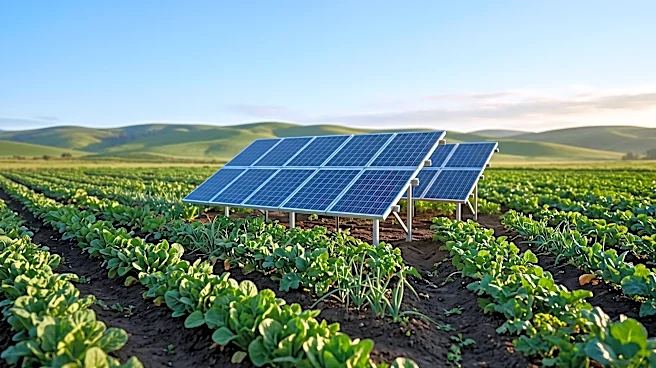
This initiative represents a significant advancement in sustainable land management and the integration of agriculture with renewable energy infrastructure in the U.S. By employing sheep for vegetation control, solar farms can reduce reliance on fossil fuel-powered machinery, herbicides, and manual labor, leading to lower operational costs and a smaller environmental footprint. This 'solar grazing' model offers a dual benefit: it provides a cost-effective and eco-friendly solution for solar energy companies while creating new economic opportunities for farmers and livestock owners. It also addresses the challenge of land use optimization, allowing for agricultural activity to coexist with energy production. The expansion of Bishop's business and her involvement in larger-scale solar projects indicate a growing recognition of the economic and environmental advantages of this approach, potentially influencing land management practices across the renewable energy sector.
What's Next?
Julie Bishop's Solar Sheep LLC is expected to continue expanding, with her flock potentially reaching 1,000 animals as new projects develop. Her involvement in the planning of a 700-acre utility-scale solar facility designed for grazing suggests a future where solar farms are increasingly integrated with agricultural practices. This model could become a blueprint for other renewable energy developers seeking sustainable and cost-effective vegetation management solutions. Bishop's role as an advisor for the American Solar Grazing Association indicates a broader effort to share knowledge and build a community around this practice, which could lead to wider adoption across the U.S. The ongoing development of infrastructure specifically designed to accommodate grazing animals on solar sites will further refine and optimize this innovative approach.
Beyond the Headlines
The rise of solar grazing exemplifies a broader trend towards regenerative agriculture and circular economy principles, where different sectors find synergistic solutions. This practice challenges conventional notions of land use, demonstrating that renewable energy development and traditional farming can be mutually beneficial rather than competing. It also highlights the potential for innovative, nature-based solutions to address complex environmental and economic challenges. The ethical implications include promoting animal welfare through natural grazing environments and reducing chemical exposure. Culturally, it represents a return to more traditional, yet technologically integrated, farming methods, fostering a connection between modern energy production and historical agricultural practices. This model could inspire similar symbiotic relationships between other industries and natural processes, contributing to a more sustainable future.