






What's Happening?
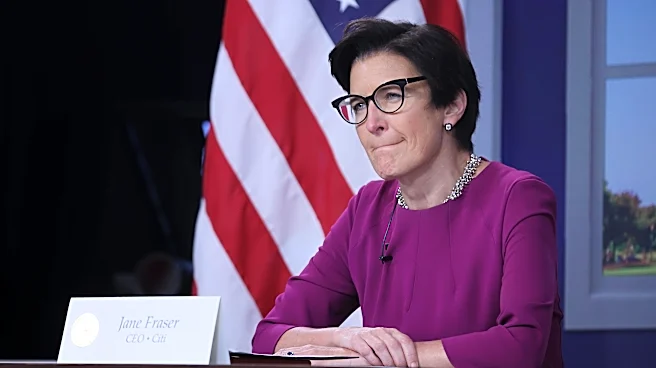
Jane Fraser, the CEO of Citigroup, has indicated that the financial institution expects to experience ongoing disruption and downtime due to technological issues. While specific details regarding the nature or extent of these technological challenges
are not provided, Fraser's statement suggests that Citigroup is bracing for a period of instability in its operational technology. This acknowledgment from the top leadership highlights an internal assessment of the bank's current technological infrastructure and its susceptibility to interruptions. The statement implies that these issues are not isolated incidents but rather a persistent challenge that the company is actively managing. The context of this announcement is not elaborated upon in the provided information, but it points to a proactive communication strategy regarding potential operational hurdles.
Why It's Important?
This announcement from Citigroup's CEO is significant for several reasons. For investors and stakeholders, it signals potential operational inefficiencies and risks that could impact the bank's performance and customer service. Technological disruptions in a major financial institution like Citigroup can lead to service outages, transaction delays, and potential security vulnerabilities, all of which can erode customer trust and financial stability. The banking sector relies heavily on robust and uninterrupted technological systems, and any prolonged or frequent downtime can have widespread implications for both individual and corporate clients. Furthermore, this transparency from leadership might be an attempt to manage expectations and prepare the market for potential future challenges, which could influence stock performance and investor confidence. The statement underscores the critical importance of resilient technology infrastructure in the modern financial landscape.
What's Next?
While the source does not explicitly detail Citigroup's next steps, the acknowledgment of anticipated technological disruptions suggests that the bank is likely implementing or planning measures to address these issues. This could involve significant investments in upgrading IT infrastructure, enhancing cybersecurity protocols, or re-evaluating existing technological systems and vendors. It is probable that Citigroup will focus on mitigating the impact of these disruptions, potentially through improved incident response plans and communication strategies for affected customers. The financial industry, including regulatory bodies, will likely monitor Citigroup's progress in resolving these challenges, as systemic technological failures in a large bank can have broader market implications. Future communications from Citigroup may provide more specific details on their strategies to enhance technological resilience.
Beyond the Headlines
The statement by Citigroup's CEO points to a broader challenge faced by many legacy financial institutions: the modernization of complex, often decades-old technological systems. The banking industry has historically relied on intricate, interconnected systems that are difficult and costly to update, making them prone to disruptions. This situation raises questions about the balance between innovation and stability in financial technology. It also highlights the increasing pressure on banks to not only adopt new technologies but also to ensure the reliability and security of their core operations. The ethical implications of technological failures, particularly concerning customer data and access to essential financial services, are also brought to the forefront. This ongoing struggle for technological resilience could shape future regulatory frameworks and industry best practices.