


What's Happening?
Actress Sydney Sweeney is facing renewed scrutiny over her past American Eagle 'great jeans' campaign, which critics previously alleged contained eugenics imagery due to its repeated 'genes' wordplay. This resurfaced discussion comes as Sweeney was seen
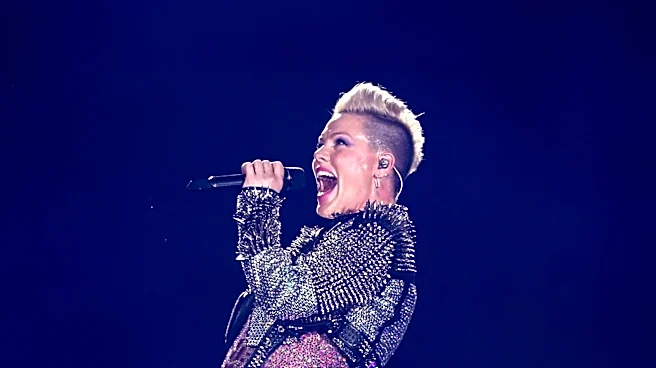
attending Todrick Hall's controversial musical 'Midnight,' alongside Pink and Lea Michele. Cultural commentator Blakely Thornton highlighted the celebrity attendance at Hall's musical, which has been criticized for its portrayal of slavery and historical revisionism. Sweeney had previously acknowledged that her silence regarding the initial 'great jeans' campaign had 'widened the divide' while denying any political beliefs attributed to the advertisement. The current context of her association with Hall's musical has brought her past advertising work back into public conversation.
Why It's Important?
The renewed focus on Sydney Sweeney's American Eagle campaign underscores the significant impact of celebrity endorsements and the potential for public backlash when advertising messages are perceived as insensitive or controversial. For American Eagle, this situation highlights the ongoing challenge of managing brand perception, especially when past campaigns are re-evaluated in new contexts. The controversy surrounding the 'great jeans' campaign, with its alleged eugenics undertones, could affect consumer trust and brand loyalty, particularly among demographics sensitive to social justice issues. The association of a brand ambassador with other controversial public figures or projects can indirectly impact the brand's image, demonstrating the interconnectedness of celebrity actions and corporate reputation in the public sphere.
Beyond the Headlines
This situation delves into the complex relationship between celebrity, brand endorsement, and public interpretation. The 'great jeans' campaign's controversy, stemming from a perceived double meaning of 'genes,' illustrates how language and imagery in advertising can be misconstrued or carry unintended implications, leading to significant public debate. It also highlights the ethical responsibility of brands and their ambassadors to anticipate and address potential interpretations of their messaging. The ongoing discussion around Sweeney's past campaign, especially in light of her association with other controversial figures, suggests a broader cultural trend where consumers and commentators are increasingly scrutinizing the values and associations of public figures and the brands they represent. This can lead to long-term shifts in how brands select ambassadors and craft their marketing messages to avoid similar pitfalls.