




What's Happening?
Martha Stewart's 'Green Room' at her Bedford estate is highlighted as a prime example of the enduring appeal of color drenching in interior design, particularly during the Christmas season. This design technique, which involves immersing a space in a single,
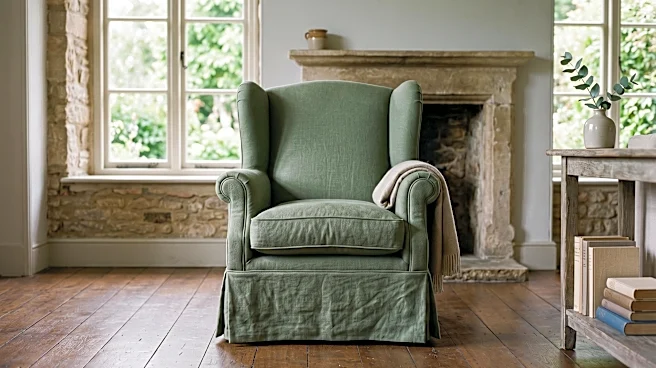
rich color, creates a dramatic yet inviting atmosphere. Maryana Grinshpun, Principal at New York-based design-build company Mammoth, explains that color drenching serves as a canvas, drawing the eye to specific objects like textures in a rug or sofa, or patterns on ornaments. Stewart's Green Room, decorated with a gold and green color scheme, provides a festive backdrop for her Christmas trees, which she notes 'light up the room' and shimmer on the branches. The use of green, evocative of evergreen forests, brings a sense of calm and quiet luxury, making it especially magical during the holidays. This trend, particularly with rich, immersive greens, is expected to continue its appeal even into 2026.
Why It's Important?
The continued popularity of color drenching, as exemplified by Martha Stewart's design choices, signifies a broader trend in U.S. interior design towards creating immersive and harmonious living spaces. This approach impacts the home decor industry, influencing product development in paints, textiles, and decorative items that align with monochromatic or deeply coordinated color schemes. For consumers, it offers a method to achieve sophisticated and calming environments, moving beyond traditional accent walls to a more enveloping aesthetic. The emphasis on green, linked to nature and feelings of reassurance and vitality, reflects a societal desire for comfort and connection to the natural world within homes. This trend suggests that designers and retailers who can offer cohesive, color-drenched solutions will likely see increased demand, while those relying on more fragmented design approaches might need to adapt.
What's Next?
The sustained appeal of color drenching, particularly with natural and immersive greens, suggests that this design philosophy will continue to influence home decor trends in the coming years. Interior designers and home furnishing companies are likely to further explore and promote monochromatic palettes, offering curated collections that facilitate this aesthetic. Consumers can expect to see more readily available options for paints, furniture, and accessories designed to complement a color-drenched scheme. The focus on natural tones like green also indicates a continued emphasis on biophilic design principles, where elements of nature are integrated into indoor spaces. This could lead to innovations in materials and textures that enhance the natural feel of color-drenched rooms, ensuring the trend remains fresh and relevant beyond 2026.
Beyond the Headlines
Beyond its aesthetic appeal, the enduring popularity of color drenching, especially with greens, touches upon deeper psychological and cultural implications. The choice of green, as noted by Karen Haller, Color and Design Psychology Specialist, resonates on a primitive level, symbolizing life, abundance, and vitality, and fostering feelings of reassurance and rest. This suggests a societal yearning for tranquility and stability, particularly in personal spaces, amidst a fast-paced world. The trend also highlights a shift towards creating more intentional and cohesive environments, where every element contributes to a unified sensory experience. This move away from eclectic or overly busy interiors towards a more harmonious and enveloping design could reflect a broader cultural desire for simplicity and well-being, influencing not just home decor but also how individuals approach their living spaces as sanctuaries.