
What's Happening?
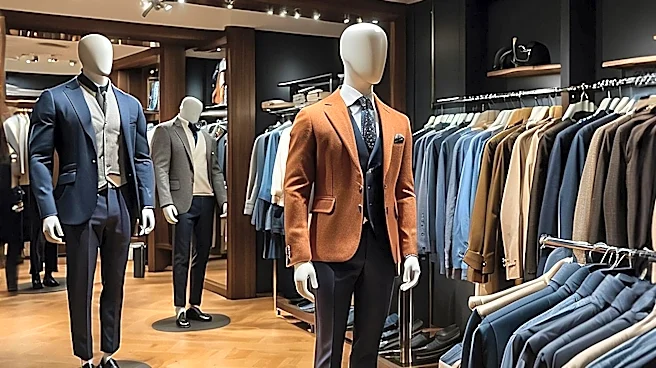
The Ermenegildo Zegna Group, a luxury menswear company listed on Wall Street, has reported a 6.4% increase in revenues for the first half of 2026, reaching 987.3 million euros. This growth is attributed
to a strong performance in the second quarter, where revenues rose by 10.3% to 517.1 million euros. The Zegna brand was a significant contributor, with a 16.9% increase in revenue, reaching 324.3 million euros. The group's direct-to-consumer channel also saw a 17.3% organic growth, reflecting a strategic focus on retail-first business models. Geographically, the Americas led with a 20% increase in revenues, while the Greater China Region and EMEA also showed positive growth.
Why It's Important?
The revenue growth of the Ermenegildo Zegna Group highlights the resilience and strategic success of luxury brands in adapting to market demands. The focus on direct-to-consumer sales indicates a shift towards more personalized customer engagement, which is crucial in the competitive luxury market. The strong performance in the Americas and Greater China suggests robust demand in these regions, which are key markets for luxury goods. This growth can influence other luxury brands to adopt similar strategies, potentially reshaping retail approaches in the industry.
What's Next?
The Ermenegildo Zegna Group plans to continue investing in its retail-first strategy and customer-centric approach. This includes expanding its direct-to-consumer channels and strengthening its presence in key markets. The company aims to maintain its growth momentum by focusing on strategic priorities that align with consumer trends. As the year progresses, the group's performance will be closely watched by industry analysts and competitors, as it may set benchmarks for luxury retail strategies.
Beyond the Headlines
The Ermenegildo Zegna Group's success underscores the importance of heritage and authenticity in luxury branding. By leveraging its Italian supply chain and legacy, the company has managed to create a unique value proposition that resonates with consumers. This approach not only enhances brand loyalty but also sets a standard for sustainability and quality in the luxury sector. As consumer preferences evolve, maintaining this balance between tradition and innovation will be crucial for long-term success.