





What's Happening?
Aviation Week's newly released 2027 Commercial Fleet and MRO Forecast predicts that commercial aircraft deliveries from Airbus and Boeing in 2026 will be 4% lower than the total deliveries in 2018. Despite improved production rates this year, the forecast,
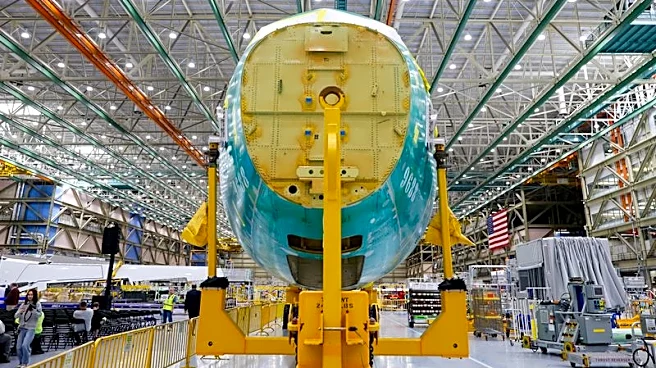
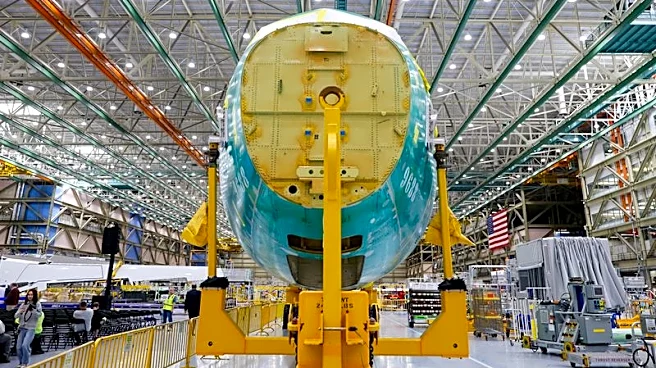
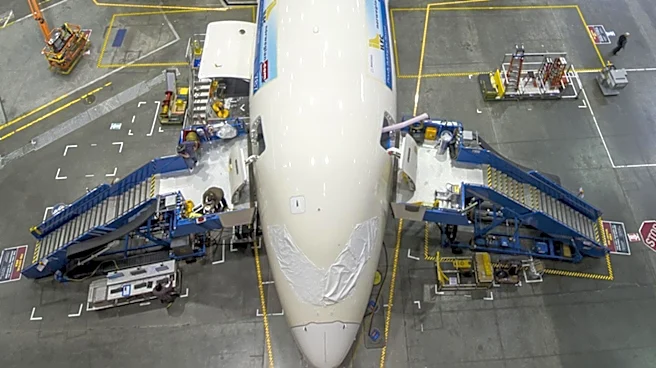
previewed on October 15, indicates that 1,686 commercial aircraft are expected to be delivered by the end of 2026. This figure, while higher than any year since 2019, still trails the 1,753 aircraft delivered in 2018. Production rates matching those of 2018 are not anticipated to be reached again until 2027 at the earliest. Boeing delivered 57 aircraft in September, bringing its year-to-date total to 475, an 8% increase year-over-year. However, the company needs to deliver 137 more 737s in the last quarter to meet its nearly 500 narrowbody target for the year. Airbus delivered 72 aircraft in September, with year-to-date deliveries at 547. To reach its midpoint target of 870 aircraft for the year, Airbus must deliver 323 more aircraft in the fourth quarter.
Why It's Important?
This forecast highlights ongoing challenges in the aerospace manufacturing sector, particularly for major players like Boeing and Airbus. The inability to consistently meet or exceed pre-2019 delivery levels indicates persistent supply chain issues, production bottlenecks, or certification delays, which can impact airline fleet expansion plans and overall industry growth. For U.S. airlines, a shortfall in new aircraft deliveries could mean continued reliance on older, less fuel-efficient planes, potentially increasing operational costs and hindering efforts to modernize fleets. The slower-than-expected ramp-up in production rates, especially for Boeing's 737 MAX, has already led to investor concerns, with Boeing's stock price down 15% year-to-date. This situation affects not only the airframers but also their extensive network of suppliers and the broader aviation ecosystem, including maintenance, repair, and overhaul (MRO) providers. The forecast also projects a significant increase in MRO demand, with $1.77 trillion expected over 2027-2036, indicating a growing need for maintenance services as airlines manage their existing fleets.
What's Next?
Manufacturers will face continued pressure to stabilize and increase production rates to meet demand. Boeing is expected to face questions from financial analysts regarding its third-quarter results and its ability to meet delivery targets. The certification of the 737-10 variant is seen as a crucial step for Boeing to significantly increase deliveries. Airbus also needs to refine its production trajectory with RTX's Pratt & Whitney to achieve its planned monthly rates for the A320neo-family aircraft. The fourth quarter of the current year will be critical for both airframers to demonstrate progress towards their annual delivery goals. Looking further ahead, the forecast anticipates that 2018 delivery levels will not be surpassed until 2027 at the earliest, with deliveries potentially reaching 2,000 in 2028 and peaking around 2,250 in 2032. North America is projected to receive the largest share of new deliveries between 2027 and 2036, accounting for 20% of the total.
Beyond the Headlines
The persistent challenges in aircraft manufacturing extend beyond immediate delivery numbers, reflecting deeper structural issues within the global supply chain and the complexities of modern aircraft production. The reliance on a few major airframers means that any disruptions, such as those caused by certification delays or supplier issues, have ripple effects across the entire aviation industry. This situation could lead to increased competition for available aircraft, potentially driving up prices and lease rates for airlines. Furthermore, the projected increase in aircraft retirements, averaging 943 aircraft per year from 2026-2035, suggests a growing market for used spare parts and green-time engines, which could impact aftermarket pricing. The significant growth in MRO demand, particularly for engine maintenance, highlights the increasing sophistication and cost of maintaining modern aircraft, which will be a key factor for airlines' operational budgets and profitability in the coming decade.