







What's Happening?
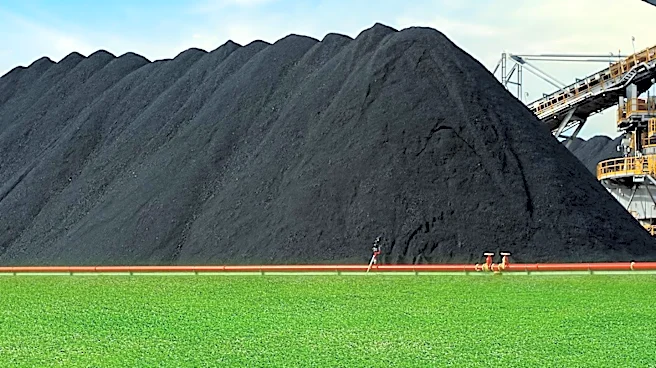
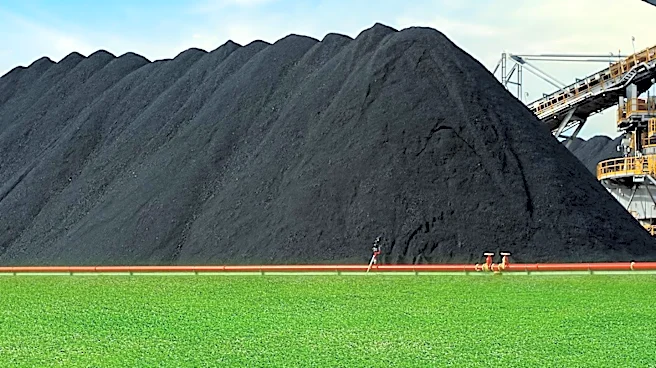
In 2025, the United States experienced the largest increase in coal consumption globally, rising by 0.80 exajoules (EJ) to reach 8.73 EJ. This increase marked a reversal from the previous year, driven by colder winter weather that boosted natural gas
demand and prices, making coal-fired power generation more economically viable. The U.S. was followed by Indonesia, which saw a 0.43 EJ increase in coal consumption. Despite being the world's largest coal consumer, China maintained its consumption levels, while Europe continued to reduce its coal use as part of its transition to renewable energy.
Why It's Important?
The rise in U.S. coal consumption highlights the ongoing challenges in balancing energy demand with environmental goals. As natural gas prices fluctuate, coal remains a significant part of the energy mix, particularly during periods of high demand. This trend underscores the complexities of transitioning to cleaner energy sources and the need for policies that support sustainable energy solutions. The data also reflects broader global energy dynamics, with different regions experiencing varying trends in coal consumption based on economic, environmental, and policy factors.
What's Next?
The increase in coal consumption in the U.S. may prompt discussions on energy policy and the role of coal in the nation's energy strategy. As the country continues to navigate the transition to renewable energy, stakeholders will need to address the economic and environmental implications of coal use. Efforts to reduce reliance on coal may involve investing in renewable energy infrastructure, improving energy efficiency, and implementing policies that encourage cleaner energy sources. The global energy landscape will continue to evolve, with regions adapting to changing demand and environmental considerations.