







What's Happening?
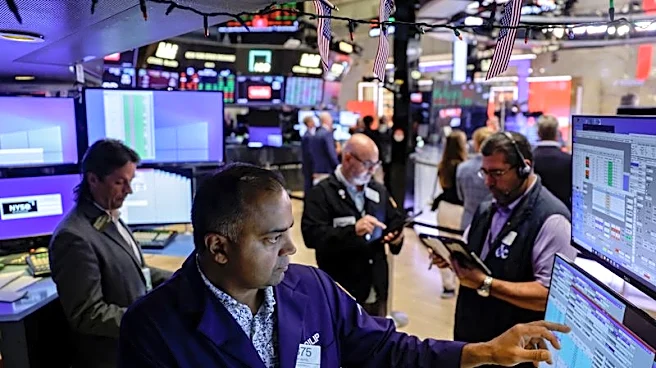
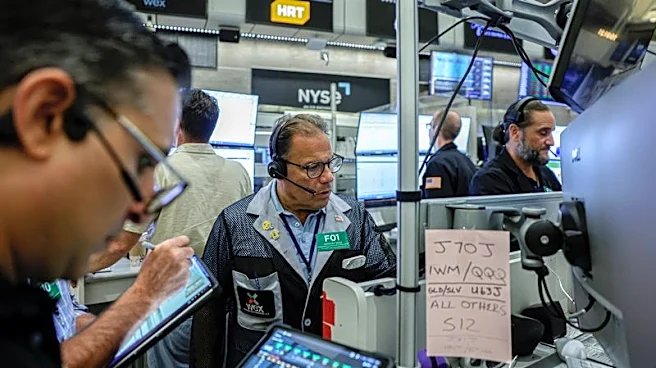
J.P. Morgan has increased its year-end target for the S&P 500 index to 8,000 from 7,800, driven by expectations of strong corporate earnings and the impact of AI investments. This new target suggests a 3.1% increase from the index's recent close of 7,757.64.
The decision aligns with a trend among brokerages predicting the S&P 500 will reach 8,000 by the end of 2026. J.P. Morgan analysts highlighted that as backlogs convert into revenue, cloud growth will support AI capital expenditures, easing concerns about returns on invested capital. The brokerage also adjusted its earnings-per-share forecasts for the S&P 500 to $365 for 2026 and $420 for 2027, up from previous estimates. The S&P 500 has gained 13.3% this year, buoyed by AI optimism, despite geopolitical tensions affecting oil markets.
Why It's Important?
The revised target by J.P. Morgan underscores the growing confidence in AI's role in driving economic growth and corporate earnings. This optimism is reflected in the stock market's performance, with the S&P 500 showing significant gains. The focus on AI investments by major companies like Google, Amazon, and Microsoft highlights the sector's potential to transform industries and boost financial performance. However, the decision to maintain a forward valuation multiple target at about 20 times indicates caution due to higher interest rates and geopolitical risks. The outcome of these investments could significantly impact the U.S. economy, influencing investor sentiment and market dynamics.
What's Next?
As the S&P 500 approaches the 8,000 mark, investors and analysts will closely monitor corporate earnings reports and AI investment outcomes. The performance of major tech companies will be pivotal in sustaining market growth. Additionally, geopolitical developments, particularly in the Middle East, could influence market stability. Stakeholders will need to navigate these uncertainties while capitalizing on AI-driven opportunities. The financial sector may also see shifts in investment strategies as firms adjust to evolving market conditions.