






What's Happening?
Economists have been studying the application of game theory to soccer, particularly focusing on penalty kicks. The analysis reveals that there is an optimal strategy for taking penalty kicks, which was once a controversial idea in economics. This strategy has
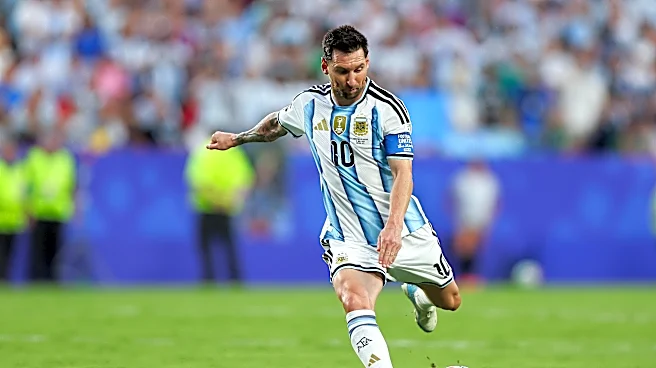
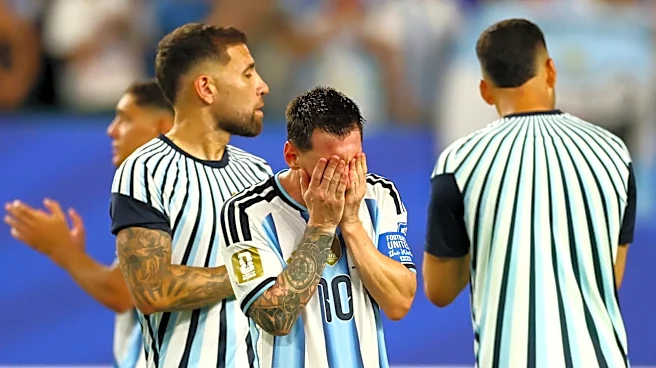
been explored in the context of real-life soccer players, including renowned figures like Lionel Messi, who, despite his scoring prowess, is considered average in penalty situations. The discussion is part of a broader examination of how game theory has influenced soccer and vice versa, as highlighted in a recent episode of the Soccernomics podcast.
Why It's Important?
The exploration of game theory in soccer highlights the intersection of sports and economics, offering insights into decision-making processes under pressure. This analysis can impact how players and coaches approach penalty situations, potentially altering training methods and strategies. For economists, it provides a real-world application of theoretical concepts, enhancing the understanding of strategic interactions in competitive environments. The findings could influence not only soccer but also other sports and industries where decision-making under uncertainty is crucial.