




What's Happening?
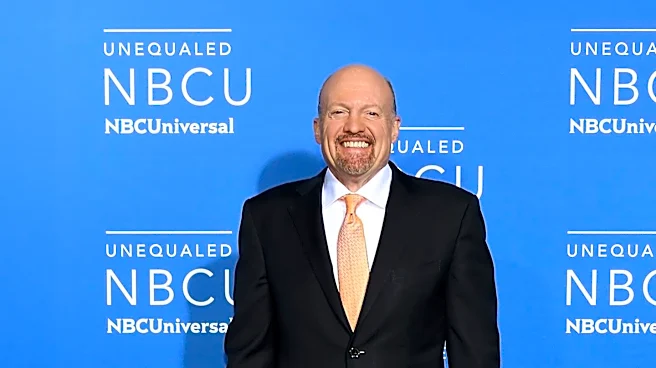
CNBC's Jim Cramer recently commented on X, highlighting a significant disparity between drug and food stocks, stating, "Hard to believe the drug stocks are so out of sync with food stocks. Food so hated." This observation reflects a mood that has been
building for months, where packaged food shares have consistently underperformed pharmaceuticals. The primary driver for this divergence is the growing popularity of GLP-1 weight-loss medications, such as Eli Lilly's Mounjaro and Zepbound, and Novo Nordisk's Ozempic and Wegovy. While Eli Lilly's stock has surged by 74% over the past year, major food companies like Campbell's, General Mills, and Conagra Brands have seen their stock prices decline by 24%, 16%, and 13% respectively. This trend suggests that the market is pricing in a long-term demand risk for processed food due to the perceived impact of these new drugs on consumer eating habits.
Why It's Important?
The market's reaction to GLP-1 drugs has created a significant shift in investor sentiment, particularly impacting the U.S. food and pharmaceutical industries. The substantial gains in pharmaceutical stocks, exemplified by Eli Lilly, underscore the perceived transformative potential of these weight-loss medications. Conversely, the decline in packaged food stocks reflects investor concerns about future demand, potentially leading to reduced sales and profitability for these companies. This situation highlights how medical advancements can rapidly alter market dynamics across seemingly unrelated sectors. For consumers, a potential long-term shift in dietary habits due to GLP-1 drugs could lead to changes in product offerings from food manufacturers, emphasizing healthier or smaller portion options. The "so hated" label on food stocks, while perhaps overly broad, signals a re-evaluation of traditional consumer staples in the face of evolving health trends and medical innovations.
What's Next?
Investors will be closely watching for measurable volume trends in packaged food companies to determine if the GLP-1 effect is translating into actual sales declines rather than just a narrative-driven market reaction. The year-to-date recovery in some food stocks, such as Kraft Heinz and Hershey, suggests that the initial shock may be subsiding, but the long-term impact remains an unknown. Further developments in the GLP-1 drug market, including the performance of Novo Nordisk's stock and the successful closure of mergers like Ingredion and Tate & Lyle, will also be key indicators. Companies in the food sector may need to adapt their strategies, potentially focusing on product innovation, healthier alternatives, or different market segments to mitigate the perceived risks. The ongoing re-evaluation of these sectors will likely continue as more data becomes available on the real-world effects of GLP-1 medications on consumer behavior.
Beyond the Headlines
The market's response to GLP-1 drugs extends beyond immediate stock price fluctuations, hinting at deeper societal and economic shifts. The widespread adoption of these medications could lead to a redefinition of dietary norms and consumer preferences, potentially impacting public health initiatives and the agricultural sector. Ethical considerations surrounding access to these expensive drugs and their long-term health implications will also become more prominent. Furthermore, the "black swan" risk of GLP-1 lawsuits, as mentioned in related discussions, could introduce unforeseen legal and financial challenges for pharmaceutical companies. This situation underscores the interconnectedness of medical innovation, consumer behavior, and economic markets, suggesting a potential long-term transformation in how society approaches health, diet, and the food industry.