






What's Happening?
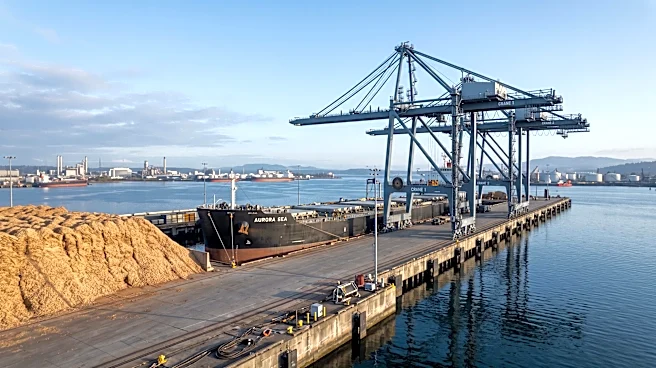
Domtar, a prominent forest products manufacturer, has announced the indefinite idling of its Howe Sound pulp mill and Bayview Fibre chipping facility in Port Mellon, British Columbia. This decision will impact approximately 400 employees. According to
company president Luc Theriault, the closures are a direct result of reduced demand from Asia, persistently low global pulp prices, and a significant decline in the availability of affordable domestic fiber. Despite previous capital investments aimed at improving performance, market conditions ultimately necessitated this action. This move follows Domtar's earlier closure of its Crofton mill in December and Canfor's permanent closure of its Northwood mill last month, highlighting a broader trend within the forestry sector.
Why It's Important?
The idling of Domtar's facilities underscores the severe challenges confronting the North American forestry sector, particularly in regions heavily reliant on the industry. The loss of 400 jobs will have a substantial economic impact on the Sunshine Coast community in British Columbia, affecting not only the direct employees but also independent logging and forestry contractors, local businesses, and the entire coastal supply chain. British Columbia Forests Minister Ravi Parmar noted that the pulp sector is experiencing a 'seismic shift' in the global market, with pulp prices nearing their lowest in 100 years when adjusted for inflation. This situation is exacerbated by factors such as U.S. government tariffs, global competition, and a lack of economically viable fiber, creating a difficult business environment for companies like Domtar.
What's Next?
Domtar has indicated that it will continue to monitor market conditions and the broader business environment, evaluating future opportunities if conditions improve. In the immediate future, the British Columbia government plans to reach out to affected communities to provide support for the displaced workers, including mental health services. Union Unifor has characterized the closure as evidence of a 'deepening crisis' in the forestry sector, warning of a potential collapse if governments do not take decisive action. The Truck Loggers Association (TLA) is urging all levels of government to address challenges within their control, such as improving access to economically viable fiber and mitigating high operating costs, to prevent further job losses and maintain the viability of the coastal forest sector.
Beyond the Headlines
The indefinite idling of Domtar's facilities reflects a complex interplay of global economic forces and local resource management issues. While reduced demand from Asia and low global pulp prices are significant external factors, the decline in affordable domestic fiber points to deeper, systemic challenges within the region's forestry practices and policies. The repeated closures of mills in British Columbia suggest a need for a comprehensive re-evaluation of the sector's sustainability and competitiveness. This situation could trigger long-term shifts in regional economies, necessitating diversification and retraining initiatives for affected workforces. The ongoing impact of U.S. tariffs also highlights the vulnerability of Canadian industries to international trade disputes, adding another layer of complexity to the economic outlook for the forestry sector.