



What's Happening?
The Trump administration has lifted a two-week ban on Anthropic's cybersecurity model, Mythos 5, allowing it to be used by more than 100 U.S. government agencies and companies. This decision follows negotiations between Anthropic and the U.S. government to address
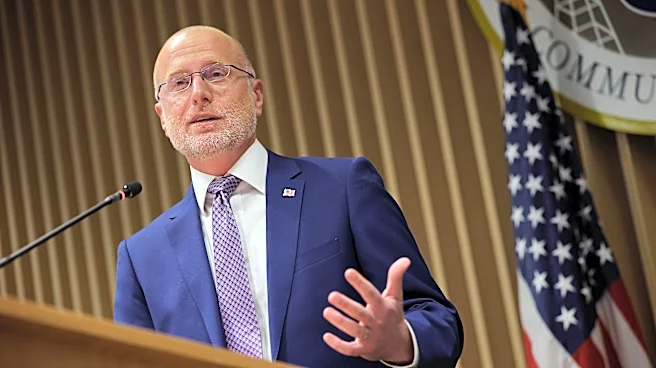
security concerns that initially led to the model's withdrawal. Commerce Secretary Howard Lutnick confirmed that appropriate safeguards are now in place, permitting access to the model by trusted partners, including non-American employees of these organizations. The ban was originally imposed due to concerns that security features in Mythos 5 and its variant, Fable 5, could be easily bypassed. While Mythos 5 is now cleared for use, the status of Fable 5 remains unaddressed in the latest directive.
Why It's Important?
The release of Mythos 5 is significant as it underscores the U.S. government's trust in Anthropic's ability to secure critical infrastructure through advanced cybersecurity models. This move could enhance the cybersecurity posture of numerous U.S. entities, potentially preventing cyber threats and attacks. The decision also reflects the administration's willingness to collaborate with tech companies to balance innovation with national security. By allowing non-American employees access, the administration acknowledges the global nature of the tech workforce, which could foster international collaboration and innovation. However, the exclusion of Fable 5 from the directive suggests ongoing concerns about its security features, highlighting the challenges in deploying AI models securely.
What's Next?
Anthropic is expected to continue working with the U.S. government to expand access to Mythos 5 and potentially address the concerns surrounding Fable 5. The company may also need to implement additional security measures to ensure compliance with government standards. Stakeholders, including government agencies and private companies, will likely monitor the deployment of Mythos 5 closely to assess its effectiveness in enhancing cybersecurity. The administration's decision could prompt other AI companies to seek similar approvals, potentially leading to broader discussions on AI governance and security standards.